Back Pain
We Give You The Best ! Services THat You Can Trust


We Give You The Best ! Services THat You Can Trust
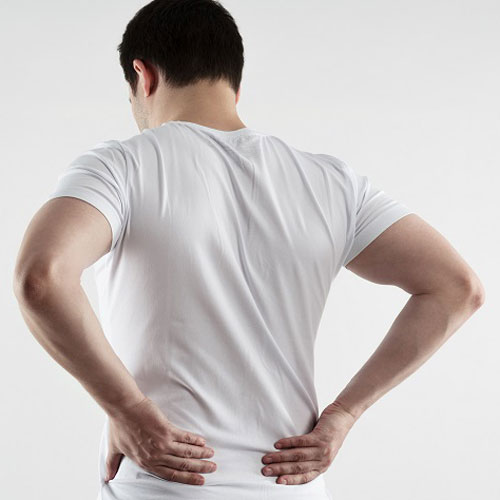

It can result from injury, activity and some medical conditions. Back pain can affect people of any age, for different reasons. As people get older, the chance of developingTrusted Source lower back pain increases, due to factors such as previous occupation and degenerative disk disease. Lower back pain may be linked to the bony lumbar spine, discs between the vertebrae, ligaments around the spine and discs, spinal cord and nerves, lower back muscles, abdominal and pelvic internal organs, and the skin around the lumbar area.
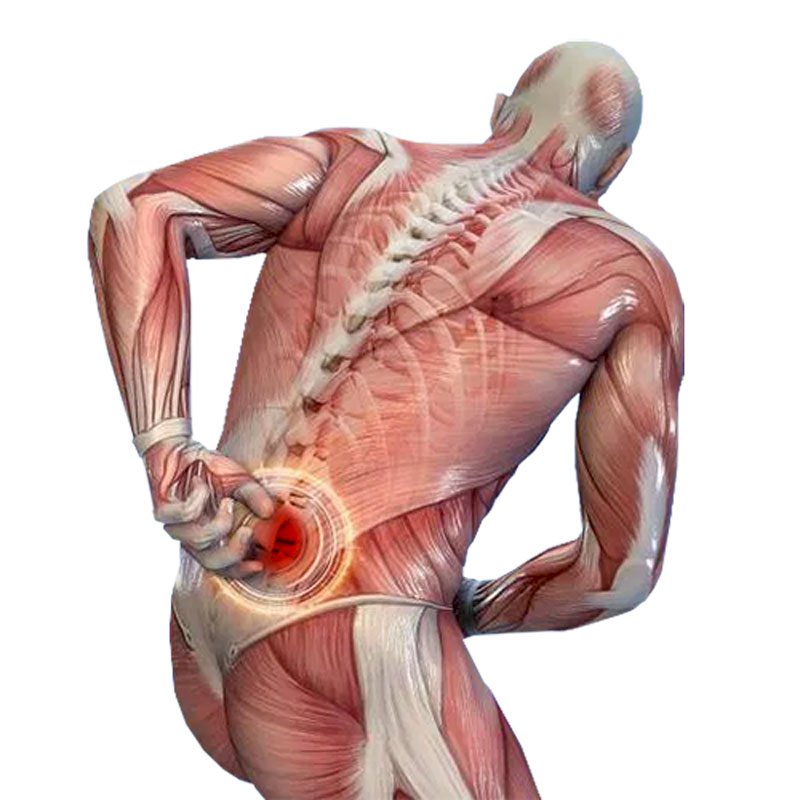
Also called the inflammatory stage, the acute stage occurs at the time of the injury, and can continue for up to 72 hours. During the acute stage, symptoms of inflammation which include redness, swelling, pain at rest, and diminished function will likely occur.
Treatment Time : 3 Month
Sesssion Required : 10
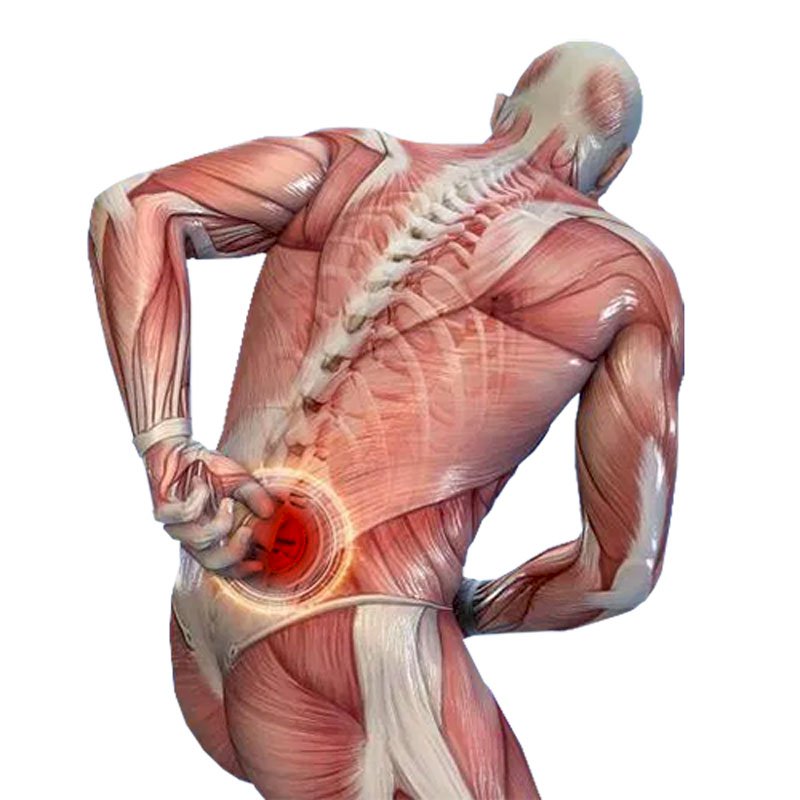
In this stage, your tissues are still very fragile, so placing stress on the injured area should be limited to times when your therapist or doctor is examining or working with you.
Treatment Time : 6 Month
Sesssion Required : 30
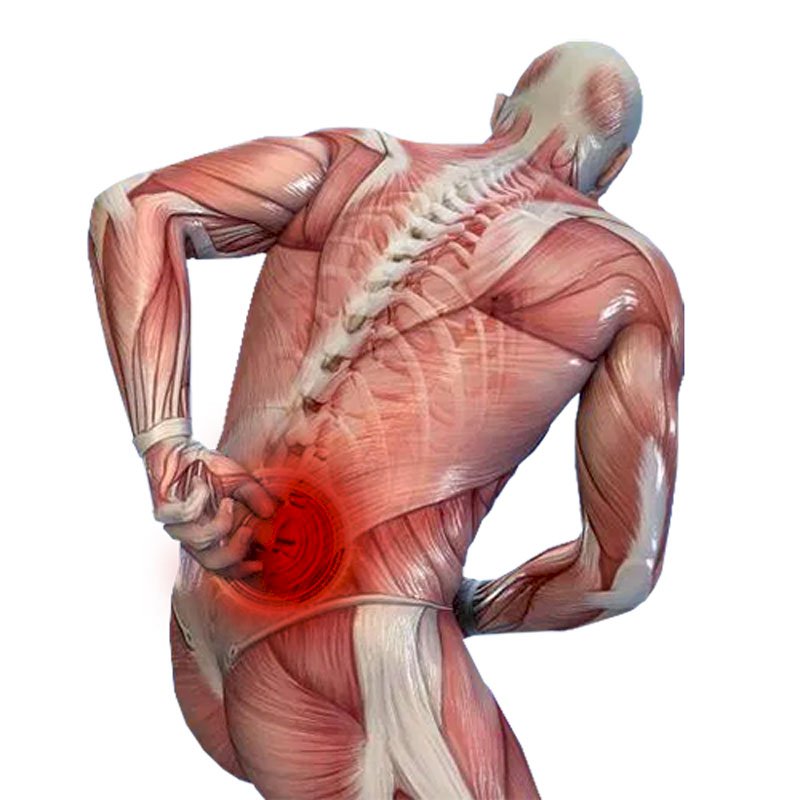
Chronic back pain is usually age-related, but can also result from a prior injury. The most common causes include: Arthritis of the spine the gradual thinning of the cartilage inside the spine. Spinal stenosis narrowing of the spinal canal that may lead to nerve pain.
Treatment Time : 9 Month
Sesssion Required : 45
Back pain is one of the most common condition people affecting and is the number one reason for disability. The intensity of pain differs from person to person. The back pain is considered chronic if it lasts for more than 10-12 weeks.
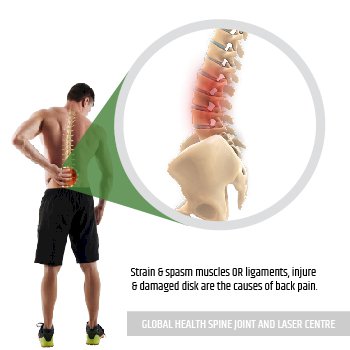
Strain & spasm muscles OR ligaments, injured & damaged disk are the causes of back pain.
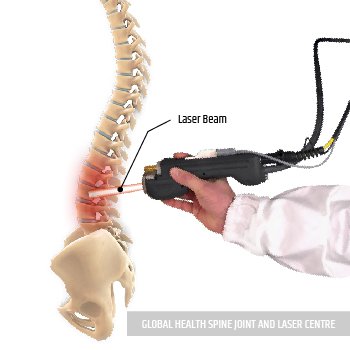
Laser Beam applied to the damaged muscles and Disc
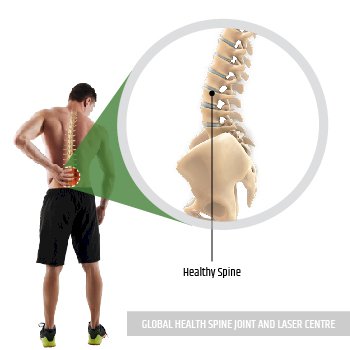
Laser Treatment eases stiffness, reduces pain, and prevents muscles from weakening. and pain has gone.
WE ARE RELIABLE & TRUSTED
MR. HARIOM BALA WAS SUFFERED FROM KNEE OSTEO-ARTHRITIS FOR 12 YEARS BEFORE HE VISITED US. HE IS FIT AND FINE NOW.
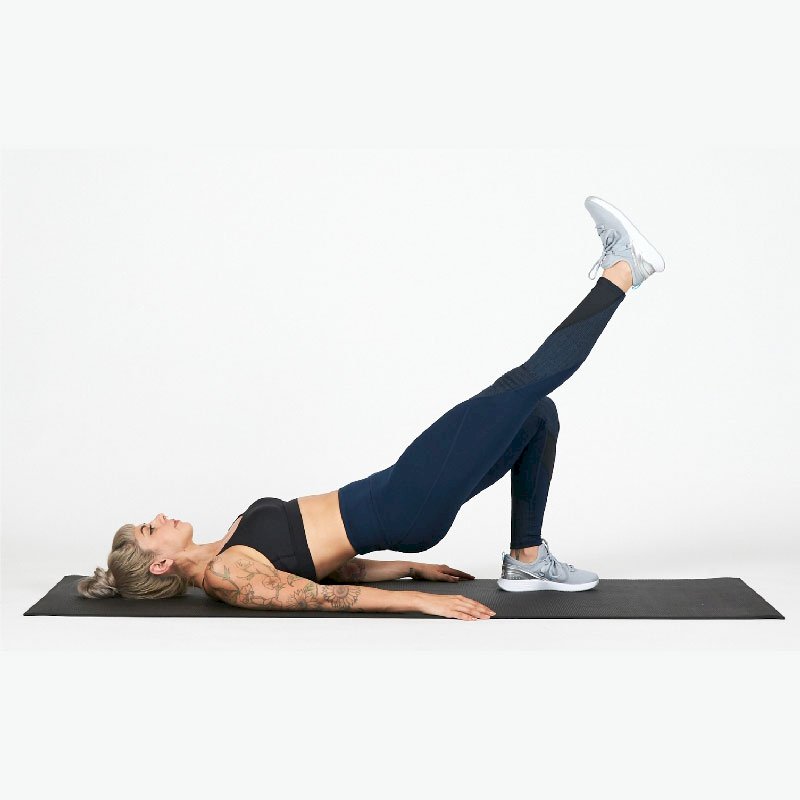
Step 1:Doing exercises to strengthen the lower back can help alleviate and prevent lower back pain. It can also strengthen the core, leg, and arm muscles. According to researchers , exercise also increases blood flow to the lower back area, which may reduce stiffness and speed up the healing process.
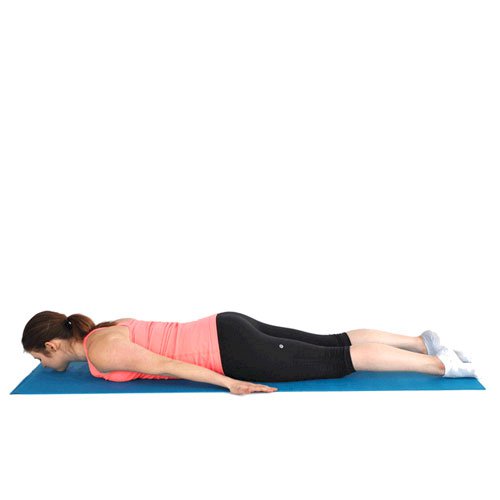
Step 1:Lie face down on the mat, with your elbows below your shoulders, and hands forward in line with your torso.
Step 2: Next, press down onto the mat with both hands and forearms as you raise your head, shoulders and chest off the ground. Feel a gentle stretch on the stomach muscles as you lengthen your spine. Remember to keep both palms and both legs pressed firmly onto the floor. Hold your position for 8 to 10 seconds,.
Step 3:Then release and go back down to starting position. Repeat this set for ten times.
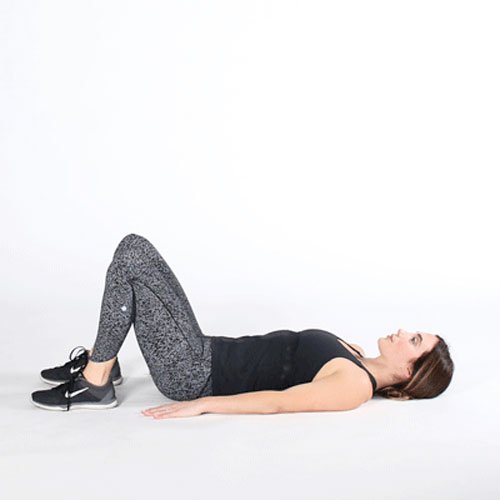
Step 1:Lie on the ground and bend the knees, placing the feet flat on the floor hip-width apart. Press the feet into the floor, keeping the arms by the sides.
Step 2: Raise the buttocks off the ground until the body forms a straight line from the shoulders to the knees. Squeeze the buttocks with the shoulders remaining on the floor.
Step 3:Lower the buttocks to the ground and rest for a few seconds. Repeat 15 times and then rest for 1 minute. Do 3 sets of 15 repetitions.
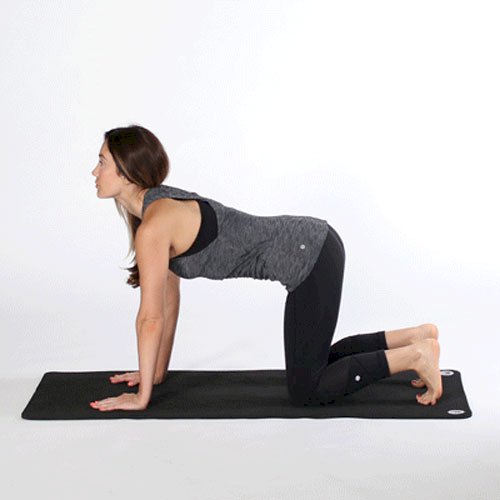
Step 1: Get onto the hands and knees with the knees hip-width apart.
Step 2: Arch the back, pulling the belly button up toward the spine.
Step 3: Slowly relax the muscles and allow the abdomen to sag toward the floor.
Step 4: Return to the starting position.
Step 5: Repeat 3–5 times, twice a day.
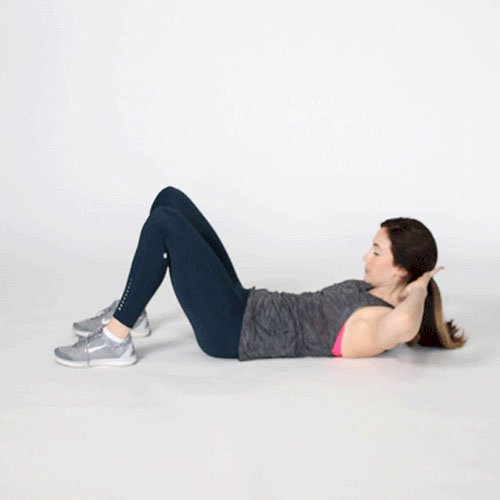
Step 1: Lie on your back in the hook lying position (knees bent and feet on the floor). Cross your hands and arms across your chest.
Step 2: Slowly raise your head, neck, upper back, and shoulders off the floor. As you raise up, exhale.
Step 3: As you lower down, inhale. Repeat 10 times and work up to 3 sets.
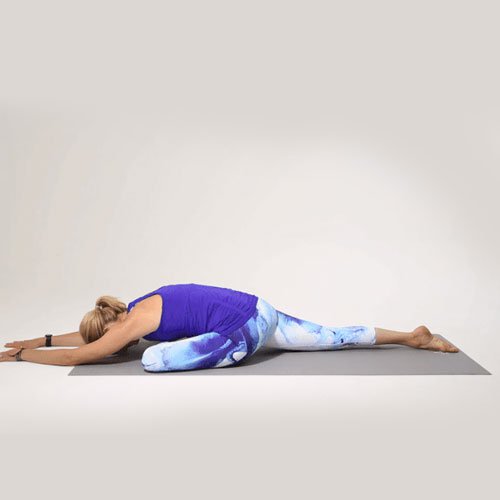
Step 1: Kneel on the floor on all fours. Pick up your right leg and move it forward on the ground in front of your body. Your lower leg should be on the ground, horizontal to the body. Your right foot should be in front of your left knee while your right knee stays to the right.
Step 2: Stretch the left leg all the way behind you on the floor, with the top of the foot on the ground and toes pointing back.
Step 3: Shift your body weight gradually from your arms to your legs so that your legs are supporting your weight. Sit up straight with your hands on either side of your legs. Support your weight with your arms as much as possible. Repeat on the other side.
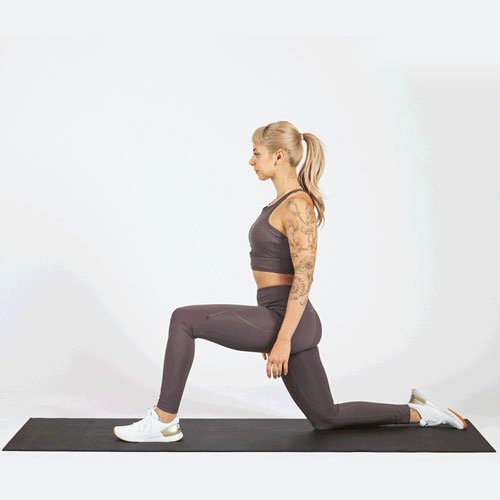
Step 1: Begin in a half-kneeling position with your right leg in front and left knee grounded.
Step 2: Squeeze the glutes on the left side to help release the hip flexors on the left, shifting your weight slightly forward.
Step 3: To add to this stretch, reach your left arm overhead and gently bend your torso toward the right. Hold for 45 seconds and repeat on the other side.
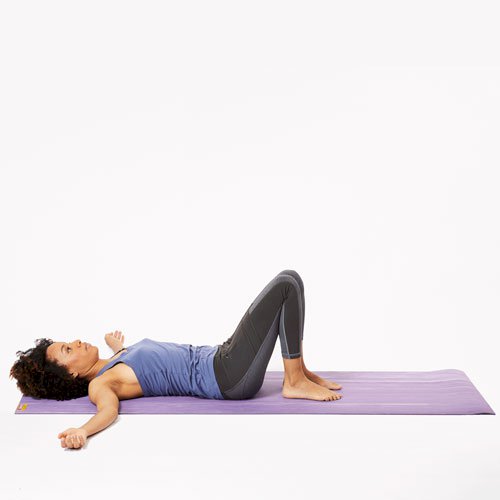
Step 1 : Lie on your back with your legs extended and your feet flexed upward.
Step 2 : Bend your right leg and clasp your hands around the knee.
Step 3 : Gently pull your right leg across your body toward your left shoulder. Hold it there for 30 seconds.
Step 4 : Push your knee so your leg returns to its starting position. Repeat for a total of 3 reps, then switch legs.
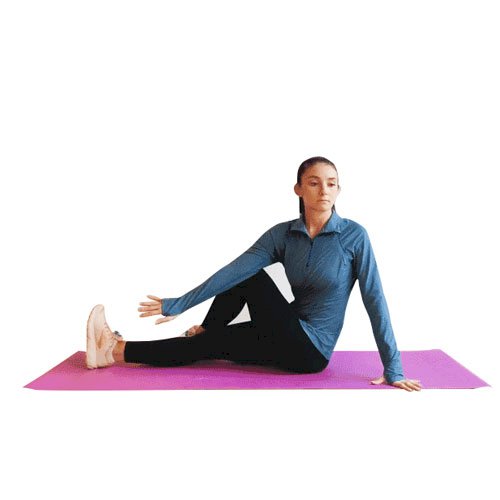
Step 1: Sit on the ground with your legs extended straight out and your feet flexed upward.
Step 2: Bend your left knee and place your foot flat on the floor on the outside of your opposite knee.
Step 3: Place your right elbow on the outside of your right knee.
Step 4: Gently turn your body toward the left. Hold for 30 seconds and repeat three times, then switch sides.
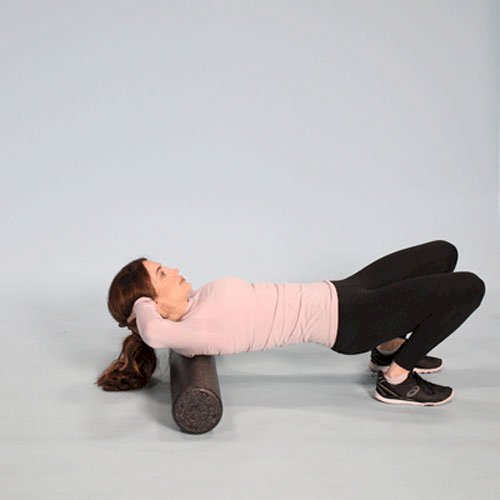
Step 1: Put the foam roller under your upper back. Keep your knees bent and feet flat on the ground. Place your hands behind your head. Let your head fall toward the floor and try to wrap yourself around the foam roller, extending the thoracic spine over the roller.
Step 2: Roll slowly up and down the vertebrae, pausing on any painful areas. Do not roll the neck or lower back, focusing only on the thoracic spine.

Contains

Contains

Contains

Contains

Contains

Contains

Contains

Contains

Contains

Contains