

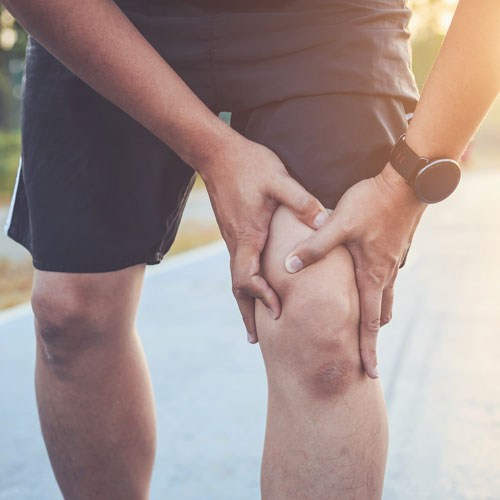

Knee Pain (knee Osteoarthritis)
Over time osteoarthritis affects the bone cartilage and synovial fluid of the knee. With moderate knee OA, changes in the joint are much more evident the cartilage surface between the bones has begun to a road narrowing the gap between the femur and the tibia. hyaluronic acid which helps synovial fluid lubricate the joint is now becoming less viscous elastic and concentrated. Osteoarthritis often affects the sub-chondral bone Located just underneath the cartilage. Some contraband provides hydration and oxygen to the cartilage. Osteo fights may increase in number and size making the bone rougher. All these factors combined to make joint pain more severe and long-lasting both with movement and at rest. OA conditions worsened dramatically the joint spaces become far narrower causing more rapid and severe destruction of the cartilage in the knee becomes inflamed and sore. Synovial fluid is decreased increasing friction and pain during movement. Osteo fights continue to develop bone moves against bone not cartilage mobility activities of daily living and quality of life are severely impacted.”

Stage 1 :
Many people feel joint pain, stiffness, or swelling. During Stage 1, there is inflammation inside the joint. The tissue in the joint swells up. There is no damage to the bones, but the joint lining, called the synovium, is inflamed.
Treatment Time : 2 Month
Sesssion Required : 10
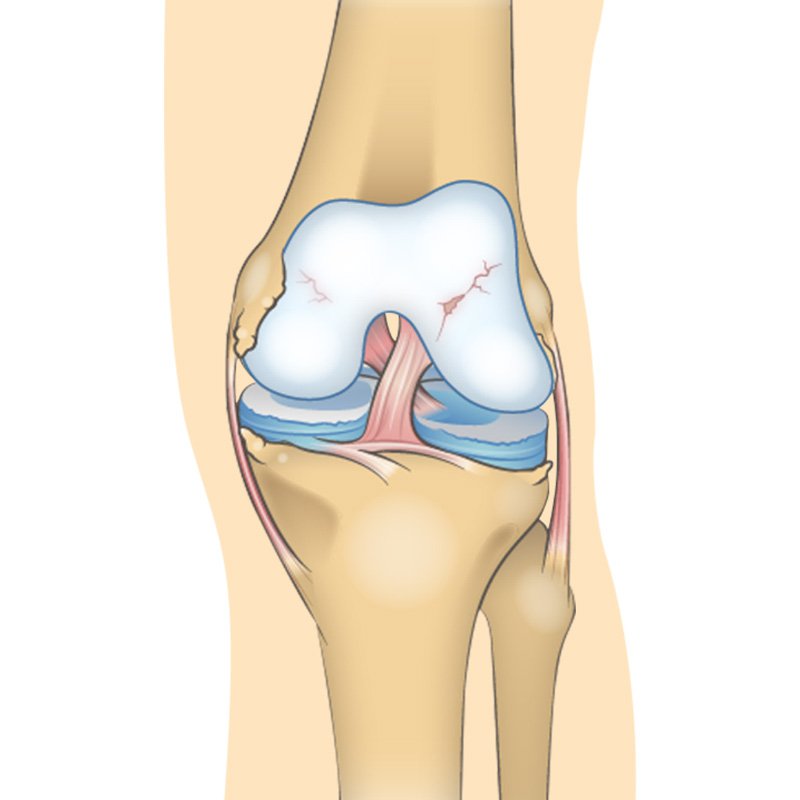
Stage 2 :
This stage people will experience symptoms for the first time. They will have pain after a long day of walking and will sense a greater stiffness in the joint. It is a mild stage of the condition, The cartilage will likely remain at a healthy size.
Treatment Time : 5 Month
Sesssion Required : 20
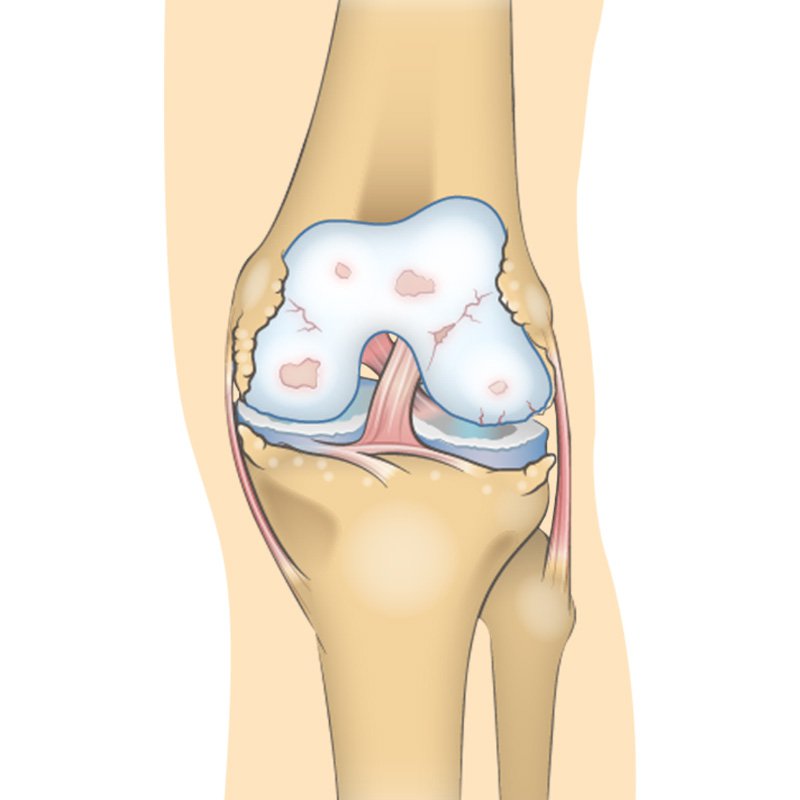
Stage 3 :
Frequent pain during movement, joint stiffness will also be more present, especially after sitting for long periods and in the morning. The cartilage between the bones shows obvious damage, and the space between the bones is getting smaller.
Treatment Time : 7 Month
Sesssion Required : 30
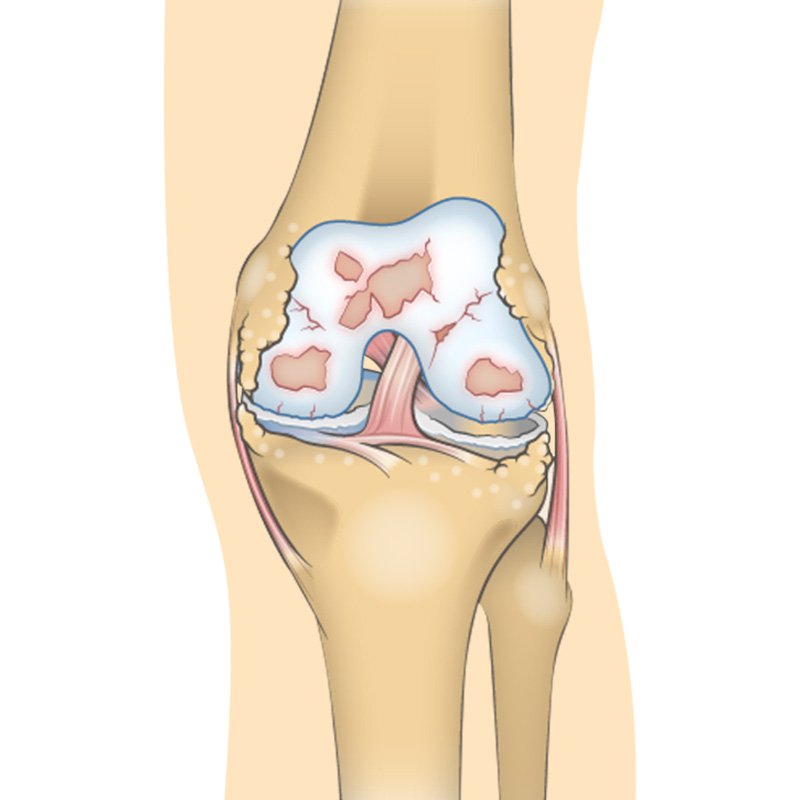
Stage 4 :
The joint space between the bones will be dramatically reduced, the cartilage will almost be completely gone and the synovial fluid will be decreased. This stage is normally associated with high levels pain and discomfort during walking or moving the joint.
Treatment Time: 9
Sesssion Required : 35
- Pain that increases when you are active, but gets a little better with rest.
- Swelling.
- Feeling of warmth in the joint.
- Stiffness in the knee, especially in the morning.
- Decrease in mobility of the knee, making it difficult to get in and out of chairs or cars, use the stairs, or walk.
- Creaking, crackly sound that is heard when the knee moves.
- Crepitus.
- Older age.
- Gender.
- Obesity.
- Joint injuries.
- Repeated stress on the joint.
- Genetics.
- Bone deformities.
- Certain metabolic diseases.
Physical Test
- Observation of the knee test
- Observation in general test
- Gait test
- Palpation test
- ROM test
- Strength test
- Normal functional activities test
- Balance
Medical Test
- X-ray
- Arthrocentesis
- Arthroscopy
- MRI
Diagonosis
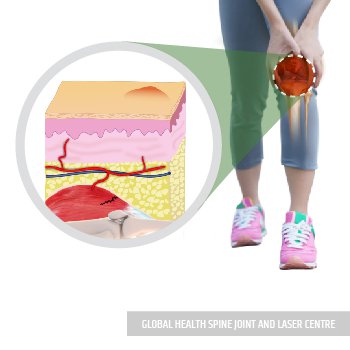
DIAGNOSIS
Damage or disease that affects any of these(the lower part of the thighbone, the upper part of the shinbone, and the kneecap.) structures may lead to pain.
LASER THERAPY
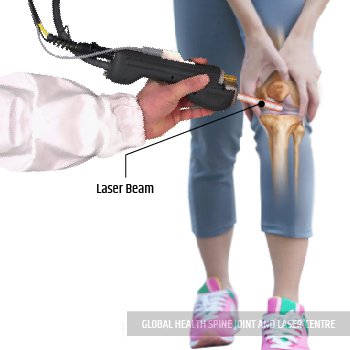
LASER TREATMENT
Laser Beam is applied to the knee for treating all damage.
Regenerative phase
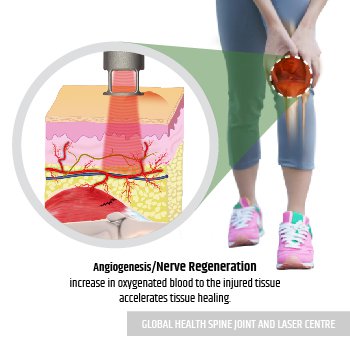
ANGIOGENESIS/ NERVE REGENERATION
Laser Beam increased oxygenated blood to the injured tissue accelerates tissue healing.
Regenerative phase 2
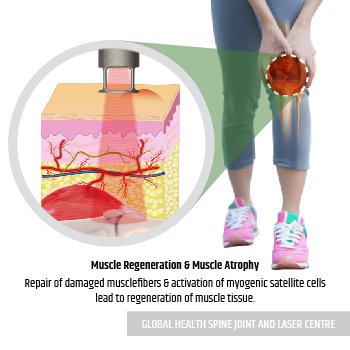
MUSCLE REGENERATION & ATROPHY
Repair of damaged muscle fibers & activation of myogenic satellite cells leads to regeneration of muscle tissue.
Outcomes
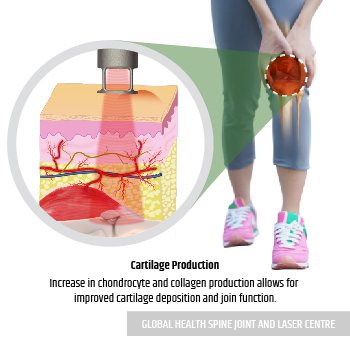
CARTILAGE PRODUCTION
After Laser Treatment, cartilage deposition and joint functions are improved.
Knee arthritis is a condition where the cartilage in the knee joint gradually wears down.
Pain, stiffness, swelling, and difficulty walking are common symptoms.
Many patients benefit from non-surgical treatment and rehabilitation.
Many patients benefit from non-surgical treatment and rehabilitation.
Age, obesity, previous injuries, genetics, and joint overuse can contribute.
Not always. Treatment depends on the stage and severity of arthritis.
Weight management, exercise, physiotherapy, and lifestyle modifications may help.
Low-impact exercises such as walking, cycling, and strengthening exercises are often recommended.
Diagnosis usually involves physical examination and imaging studies.
Yes, arthritis can affect one or both knees.
If knee pain interferes with daily activities or mobility.
Fish

Contains
- Calcium
- Vitamin D
- Potassium
- Magnesium
- Iron
- Phosphorus
- Riboflavin
- Zinc
- Omega-3
- Iodine
Fresh citrus fruits

Contains
- Carbohydrates
- Riboflavin
- Vitamin C
- Folate
- Vitamin B6
- Phosphorus
- Thiamine
- Fiber
- Niacin
- Copper
Olive oil
Contains
- Fat
- Monounsaturated Fat
- Polyunsaturated Fat
- Protein
- Saturated Fat
Fruits

Contains
- Carbohydrates
- Fiber
- Vitamins
- Flavonoids
- Antioxidants
- Protein
Vegetables

Contains
- Carbohydrates
- Potassium
- Iron
- Fiber
- Saturated Fat
- Protein
- Magnesium
- Vitamin C
- Sugar
- Sugar
- Keep a healthy body weight.
- Control your blood sugar.
- Be active every day.
- Prevent injury to your joints.
- Pay attention to pain.