Hip Flexor Strain
We Give You The Best ! Services THat You Can Trust


We Give You The Best ! Services THat You Can Trust
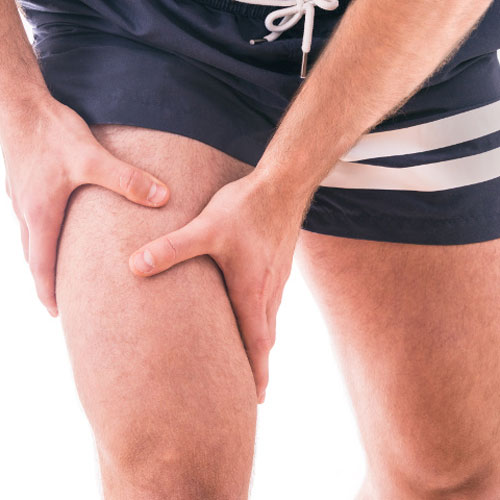
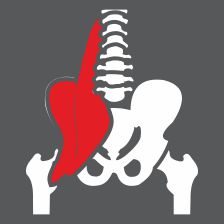
Lifting your knee toward your body takes the work of many muscles, which are collectively known as your hip flexors. The hip flexor muscles includes, the iliacus and psoas major muscles, also known as your iliopsoas, the rectus femoris, which is part of your quadriceps.These muscles and the tendons that connect them to your bones can easily be strained if you overuse them. The main work of your hip flexors is to bring your knee toward your chest and to bend at the waist. Symptoms associated with a hip flexor strain can range from mild to severe and can impact your mobility. If you don’t rest and seek treatment, your hip flexor strain symptoms could get worse. But there are many at-home activities and remedies that can help reduce hip flexor strain symptoms.

Only a few muscle fibers are damaged from minor tears.
Treatment Time : 2 Month
Sesssion Required : 10
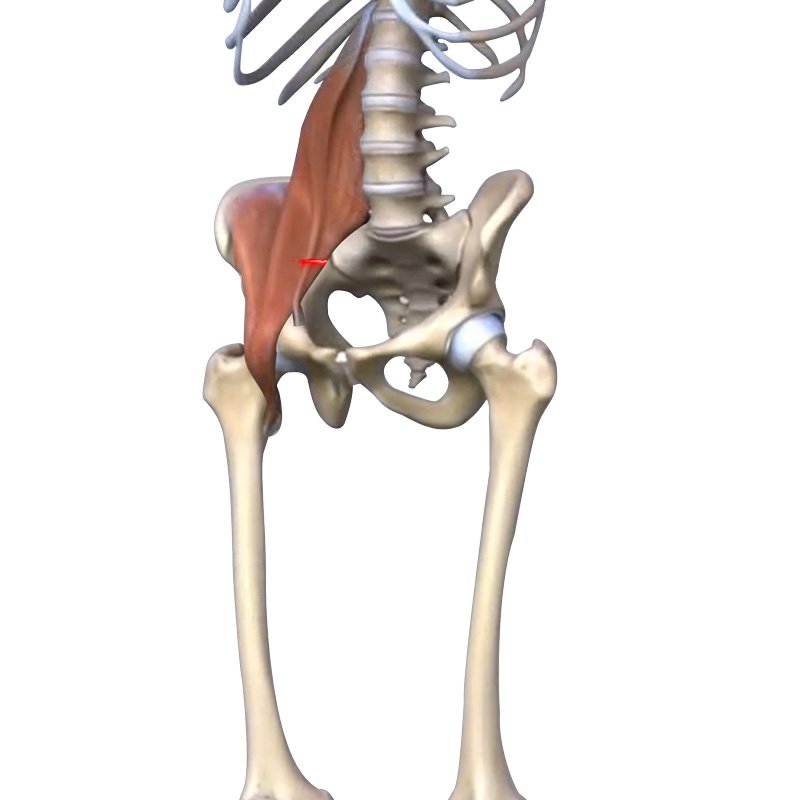
There is a potential for a loss of function to the hip flexor due to a moderate amount of damaged muscle fibers.
Treatment Time : 5 Month
Sesssion Required : 20
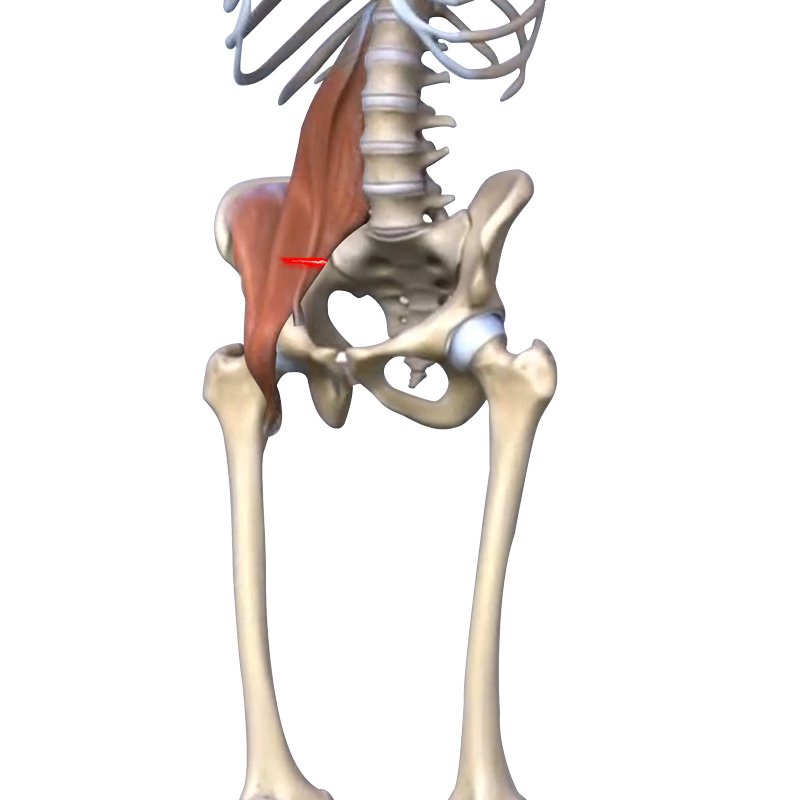
The muscle fibers are completely torn, and you can’t walk without a limp.
Treatment Time : 9 Month
Sesssion Required : 45

the muscle fibers are completely torn. If you have suffered a grade 3 tear, you probably can’t walk without a limp.
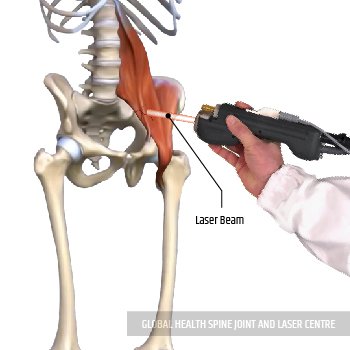
Laser beam applied to the torn muscle.
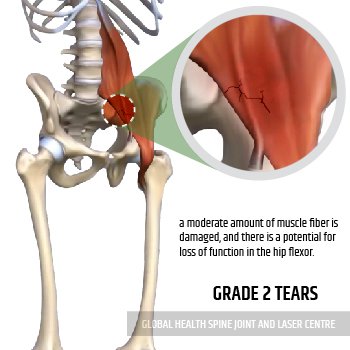
After Laser Treatment, a moderate amount of damaged muscle is left, and there is a potential for loss of function in the hip flexor.

Minor tears are left.

After some sittings, we get healthy muscles.

Step 1 : Sit on the floor or a prop with the soles of your feet pressing into each other.
Step 2 : To deepen the intensity, move your feet closer in toward your hips. Root down into your legs and sitting bones. Elongate and straighten your spine, tucking your chin in toward your chest. Hold this position for up to 2 minutes.

Step 1 : Lie on the ground and bend the knees, placing the feet flat on the floor hip-width apart. Press the feet into the floor, keeping the arms by the sides.
Step 2 : Raise the buttocks off the ground until the body forms a straight line from the shoulders to the knees. Squeeze the buttocks with the shoulders remaining on the floor.
Step 3 : Lower the buttocks to the ground and rest for a few seconds. Repeat 15 times and then rest for 1 minute. Do 3 sets of 15 repetitions.
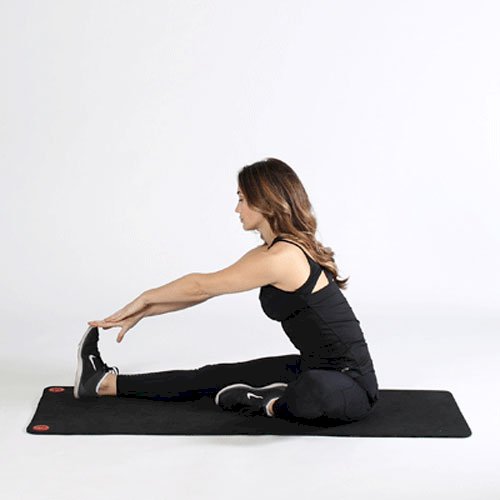
Step 1 : Sit with one leg extended and the other leg folded behind with your foot towards your glutes.
Step 2 : Fold over at the waist and reach for the shin or the foot.
Step 3 : Roll back up to the seated position. Repeat with the other leg.
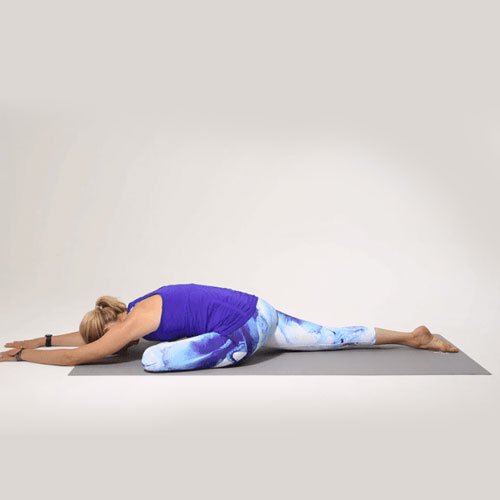
Step 1 : Kneel on the floor on all fours. Pick up your right leg and move it forward on the ground in front of your body. Your lower leg should be on the ground, horizontal to the body. Your right foot should be in front of your left knee while your right knee stays to the right.
Step 2 : Stretch the left leg out all the way behind you on the floor, with the top of the foot on the ground and toes pointing back.
Step 3 : Shift your body weight gradually from your arms to your legs so that your legs are supporting your weight. Sit up straight with your hands on either side of your legs. Support your weight with your arms as much as possible. Repeat on the other side.

Step 1 : Lie on your back with your hips square and your legs laid out comfortably on the floor.
Step 2 : Bend the knee of your non-injured leg at a 90-degree angle, planting the foot flatly on the floor. Hold for three seconds. Relax and repeat 10 times more.
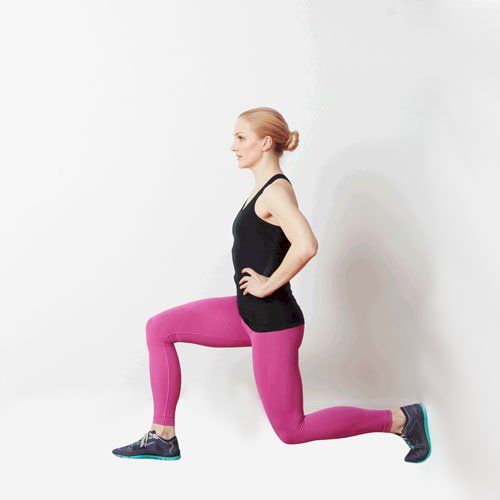
Step 1 : A person should begin by standing straight with their feet together. They then take a step forward with the right foot.
Step 2 : Bend the knee and transfer the weight onto that leg before lowering the hips toward the floor and holding the position.
Step 3 : This should then be repeated on the other side.

Step 1 : To do this stretch, a person should start in a standing position.
Step 2 : Then bend the right knee, lifting the upper part of the leg toward the ceiling and balancing on the other foot. They should try to hold for 30 seconds before switching sides.

Contains

Contains

Contains

Contains

Contains

Contains

Contains

Contains

Contains

Contains