Spine Rehab Program
We Give You The Best ! Services THat You Can Trust


We Give You The Best ! Services THat You Can Trust

A spine rehabilitation program focuses on alleviating pain, improving mobility, and strengthening muscles to support the spine. The program typically begins with a thorough assessment of posture, movement, and pain levels. It may include physical therapy techniques like stretching, strengthening exercises, and manual therapy to enhance spinal alignment and flexibility. Core strengthening exercises are crucial to stabilize the spine and reduce pressure on vertebrae and discs. Posture correction, ergonomic adjustments, and activity modification are also emphasized to prevent future strain. Advanced cases may involve aquatic therapy or other modalities, and in severe situations, surgical interventions may be explored.
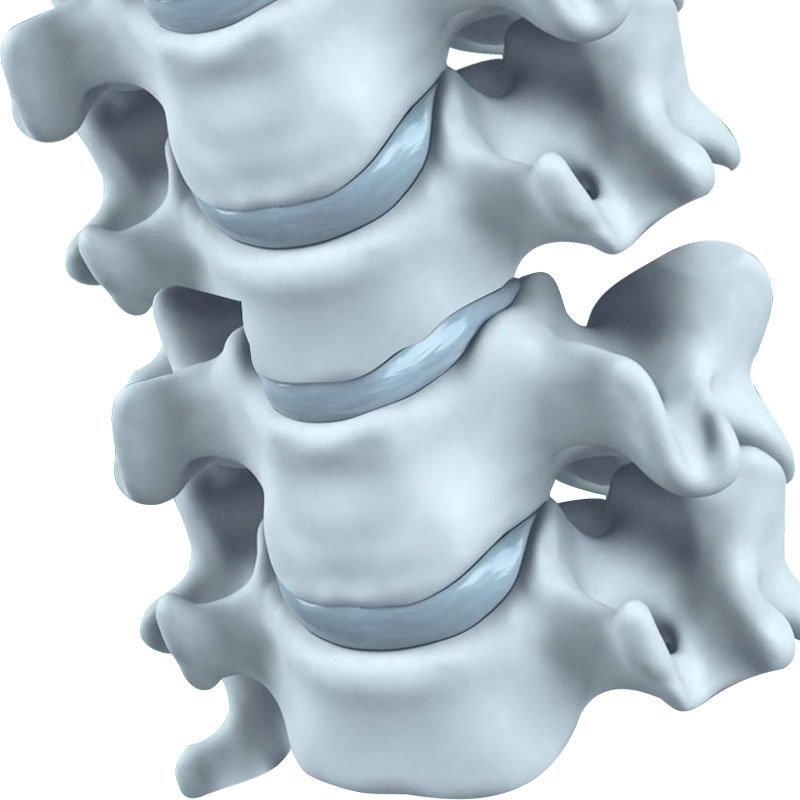
Describes the initial effects of repetitive microtrauma with the development of circumferential painful tears of the outer, innervated anulus, and associated end-plate separation that may compromise disk nutritional supply and waste removal.
Treatment Time : 3 Month
Sesssion Required : 15
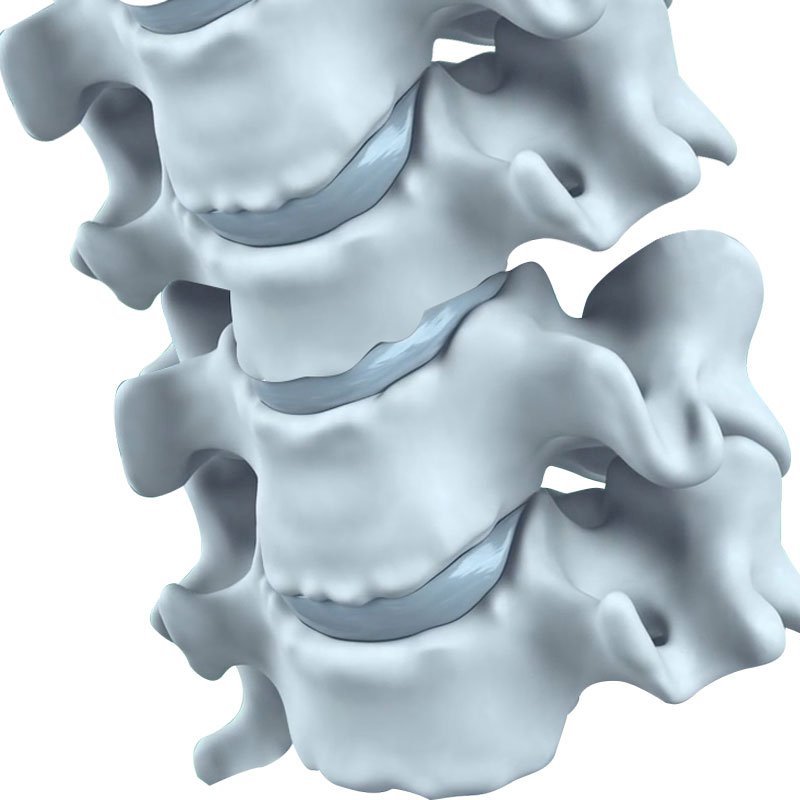
Instability Phase is characterized by the loss of mechanical integrity, with progressive disk changes of resorption, internal disruption, and additional annular tears, combined with further facet degeneration that may induce subluxation and instability.
Treatment Time : 6 Month
Sesssion Required : 30

Stabilization Phase continued disk space narrowing and fibrosis occurs along with the formation of osteophytes and transdiscal bridging.
Treatment Time : 9 Month
Sesssion Required : 45
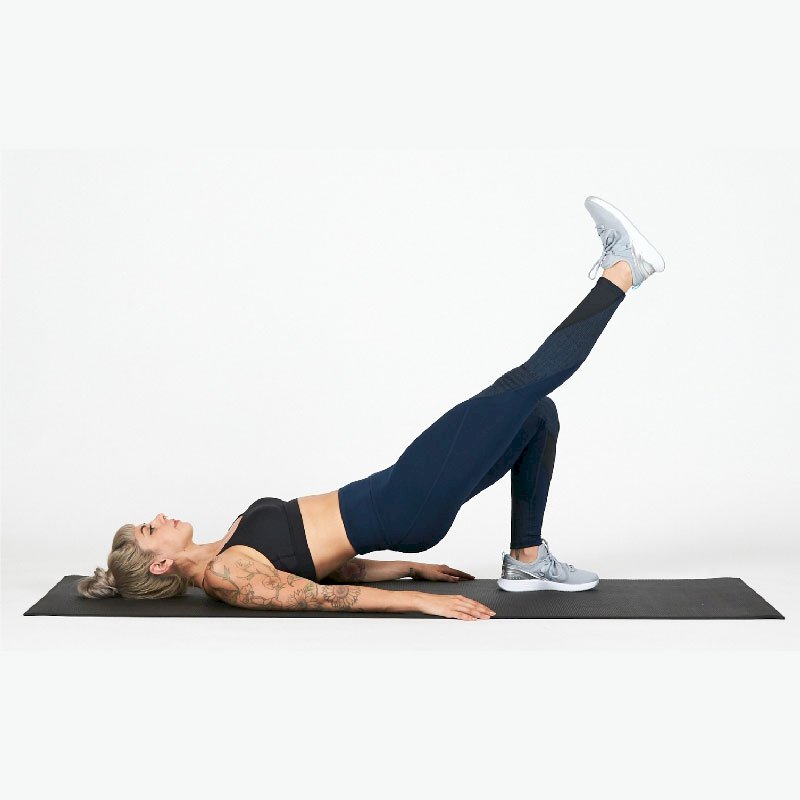
Step 1:Doing exercises to strengthen the lower back can help alleviate and prevent lower back pain. It can also strengthen the core, leg, and arm muscles. According to researchers , exercise also increases blood flow to the lower back area, which may reduce stiffness and speed up the healing process.
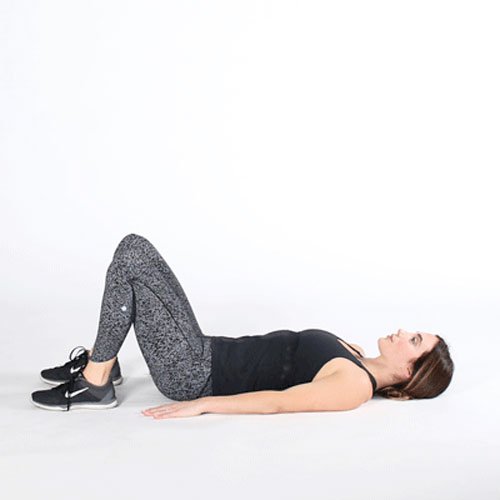
Step 1 : Lie on the ground and bend the knees, placing the feet flat on the floor hip-width apart. Press the feet into the floor, keeping the arms by the sides.
Step 2 : Raise the buttocks off the ground until the body forms a straight line from the shoulders to the knees. Squeeze the buttocks while keeping the shoulders on the floor.
Step 3 : Lower the buttocks to the ground and rest for a few seconds. Repeat 15 times, then rest for 1 minute. Do 3 sets of 15 repetitions.
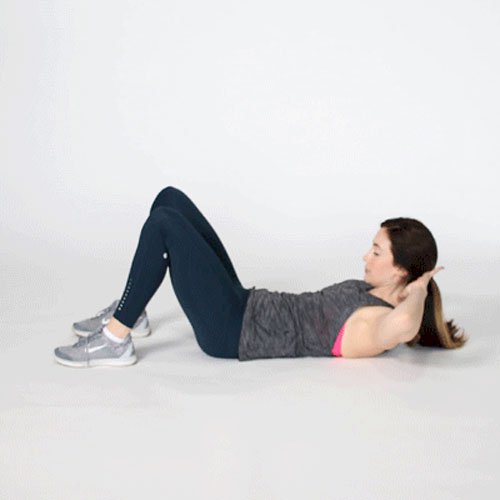
Step 1 : Lie on your back in the hook lying position (knees bent and feet on the floor). Cross your hands and arms across your chest.
Step 2 : Slowly raise your head, neck, upper back, and shoulders off the floor. As you raise up, exhale.
Step 3 : As you lower down, inhale. Repeat 10 times and work up to 3 sets.

Step 1 : Lie face down on the mat, with your elbows below your shoulders and your hands forward in line with your torso.
Step 2 : Press down onto the mat with both hands and forearms as you raise your head, shoulders, and chest off the ground. Feel a gentle stretch in the stomach muscles as you lengthen your spine. Remember to keep both palms and both legs pressed firmly onto the floor. Hold the position for 8 to 10 seconds.
Step 3 : Release and return to the starting position. Repeat this set 10 times.

Step 1 : Get onto your hands and knees with the knees hip-width apart.
Step 2 : Arch your back, pulling the belly button up toward the spine.
Step 3 : Slowly relax the muscles and allow the abdomen to sag toward the floor.
Step 4 : Return to the starting position. Repeat 3–5 times twice a day.
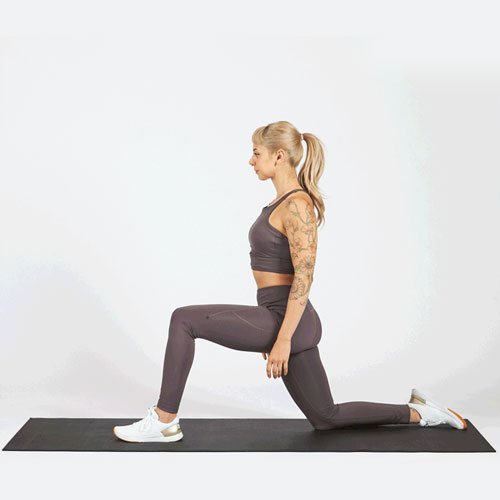
Step 1 : Begin in a half-kneeling position with your right leg in front and your left knee grounded.
Step 2 : Squeeze the glutes on the left side to help release the hip flexors on the left, shifting your weight slightly forward.
Step 3 : To add to this stretch, reach your left arm overhead and gently bend your torso toward the right. Hold for 45 seconds and repeat on the other side.
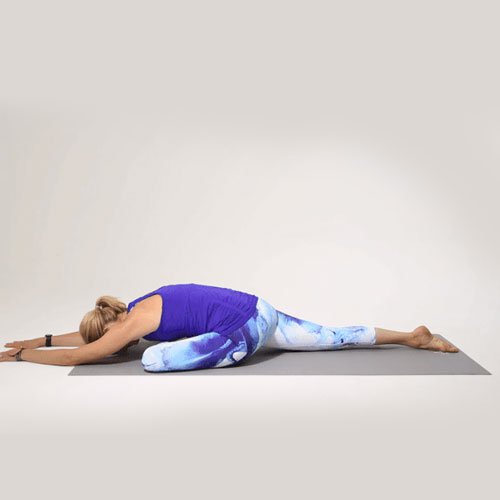
Forward Pigeon Pose
Step 1 : Kneel on the floor on all fours. Pick up your right leg and move it forward on the ground in front of your body. Your lower leg should be on the ground, horizontal to the body. Your right foot should be in front of your left knee while your right knee stays to the right.
Step 2 : Stretch the left leg out all the way behind you on the floor, with the top of the foot on the ground and toes pointing back.
Step 3 : Shift your body weight gradually from your arms to your legs so that your legs are supporting your weight. Sit up straight with your hands on either side of your legs. Support your weight with your arms as much as possible. Repeat on the other side.
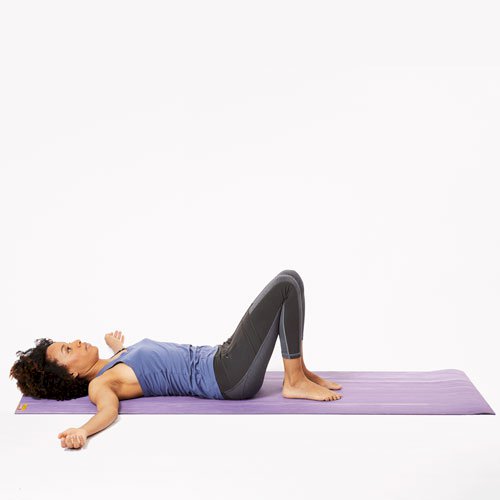
Step 1 : Lie on your back with your legs extended and your feet flexed upward.
Step 2 : Bend your right leg and clasp your hands around the knee.
Step 3 : Gently pull your right leg across your body toward your left shoulder. Hold the position for 30 seconds.
Step 4 : Push your knee so your leg returns to its starting position. Repeat for a total of 3 reps, then switch legs.
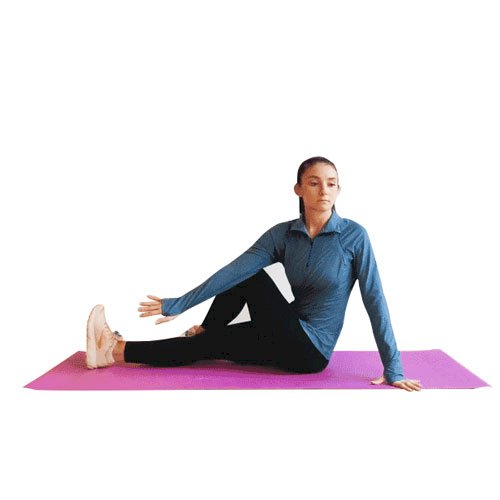
Step 1 : Sit on the ground with your legs extended straight out and your feet flexed upward.
Step 2 : Bend your left knee and place your foot flat on the floor on the outside of your opposite knee.
Step 3 : Place your right elbow on the outside of your left knee.
Step 4 : Gently turn your body toward the left. Hold for 30 seconds and repeat three times, then switch sides.

Step 1 : Put the foam roller under your upper back. Keep your knees bent and feet flat on the ground. Place your hands behind your head. Let your head fall toward the floor and try to wrap yourself around the foam roller, extending the thoracic spine over the roller.
Step 2 : Roll slowly up and down the vertebrae, pausing on any painful areas. Do not roll the neck or lower back, focusing solely on the thoracic spine.

Contains

Contains

Contains

Contains

Contains

Contains

Contains

Contains

Contains