
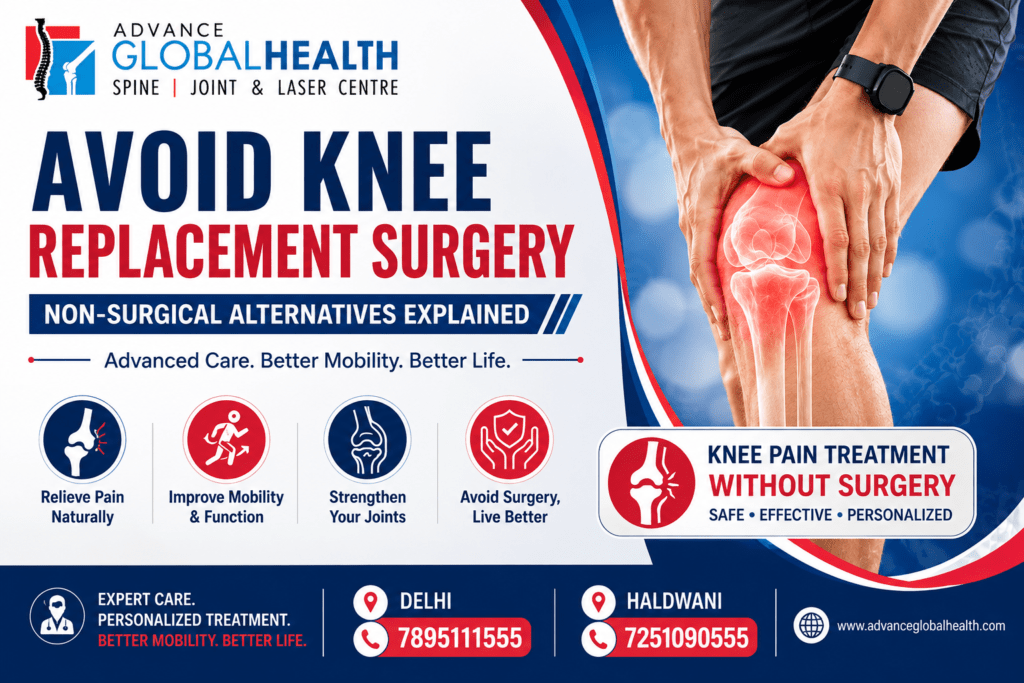
Knee pain is one of the most common orthopedic problems affecting millions of people worldwide. Whether it’s caused by aging, osteoarthritis, injury, or excess body weight, persistent knee pain can significantly impact your daily life. Many people worry that surgery is their only option, but the good news is that knee treatment without surgery is possible for many patients.
At Advance Global Health, we believe that surgery should be considered only when absolutely necessary. Our specialists focus on personalized treatment plans that help patients manage pain, improve mobility, and maintain an active lifestyle through advanced non-surgical solutions whenever appropriate.
People Also Like to read this: Knee Osteoarthritis: Non-Surgical Treatment by Advance Global Health
Understanding Knee Osteoarthritis
Knee osteoarthritis is a degenerative joint disease in which the protective cartilage covering the ends of the bones gradually wears away. As the cartilage deteriorates, bones begin rubbing against each other, causing pain, stiffness, swelling, and reduced movement.
Common symptoms include:
- Pain while walking or climbing stairs
- Morning stiffness
- Swelling around the knee
- Clicking or grinding sounds
- Difficulty standing for long periods
- Reduced flexibility
- Knee instability
Although osteoarthritis cannot always be completely reversed, many people can successfully manage symptoms through Knee Osteoarthritis Treatment without surgery.
Do You Really Need Knee Replacement Surgery?
Not necessarily.
Many patients assume that severe knee pain automatically means they need knee replacement surgery. However, this is not always true.
Before recommending surgery, orthopedic specialists usually evaluate:
- Severity of arthritis
- MRI or X-ray findings
- Pain intensity
- Walking ability
- Joint stability
- Age
- Overall health
- Response to conservative treatment
Many patients experience significant improvement with non-surgical treatment and can delay—or in some cases avoid—knee replacement surgery.
Non-Surgical Knee Treatment Options
1. Comprehensive Clinical Evaluation
Every successful treatment begins with an accurate diagnosis.
At Advance Global Health, specialists carefully assess:
- Joint alignment
- Cartilage condition
- Range of motion
- Muscle strength
- Lifestyle factors
This helps create a customized treatment plan.
2. Physical Therapy and Rehabilitation
One of the most effective knee treatment without surgery options is structured physical therapy.
Benefits include:
- Stronger thigh muscles
- Better joint stability
- Improved flexibility
- Reduced pain
- Better walking ability
Regular rehabilitation often helps reduce stress on the knee joint.
3. Weight Management
Every extra kilogram of body weight places additional pressure on your knees.
Maintaining a healthy weight can:
- Reduce joint stress
- Improve mobility
- Slow arthritis progression
- Reduce pain
Even modest weight loss can make a noticeable difference.
4. Lifestyle Modifications
Simple lifestyle changes can significantly improve knee health.
These include:
- Avoid prolonged standing
- Use proper footwear
- Avoid excessive stair climbing
- Choose low-impact exercises
- Maintain good posture
These adjustments reduce unnecessary stress on the knee joint.
5. Medications
Doctors may prescribe medications to help control pain and inflammation.
Medication should always be taken under medical supervision and as part of a comprehensive treatment plan rather than as a long-term standalone solution.
6. Knee Braces and Support
In selected patients, knee braces may:
- Improve stability
- Reduce discomfort
- Support daily activities
- Improve confidence while walking
Your orthopedic specialist can recommend the most appropriate brace based on your condition.
7. Image-Guided Injections
For some patients, image-guided injections may be considered to help reduce pain and inflammation.
The suitability of injections depends on the severity of arthritis and should be determined by a qualified orthopedic specialist.
8. Regenerative Medicine (When Clinically Appropriate)
In carefully selected cases, regenerative medicine approaches may be considered as part of a personalized treatment plan. Their suitability depends on the patient’s condition and current clinical evidence, and they should be discussed with an experienced orthopedic specialist.
When Is Knee Replacement Surgery Necessary?
Although many patients benefit from conservative treatment, surgery may become necessary when:
- Severe cartilage loss
- Advanced osteoarthritis
- Persistent pain despite treatment
- Significant limitation in daily activities
- Knee deformity
- Poor quality of life
The decision should always be made after a detailed orthopedic evaluation.
Benefits of Choosing Non-Surgical Treatment
Patients who qualify for conservative management may experience:
- Reduced knee pain
- Improved joint mobility
- Better walking ability
- Lower recovery time
- No surgical incision
- Lower risk of surgical complications
- Improved quality of life
The results vary depending on the severity of arthritis and adherence to the treatment plan.
How Advance Global Health Helps
At Advance Global Health, we follow a patient-centered approach to treating knee arthritis.
Our specialists perform a detailed clinical evaluation before recommending any treatment. Depending on the patient’s condition, the treatment plan may include:
- Advanced non-surgical pain management
- Personalized rehabilitation programs
- Structured physiotherapy
- Lifestyle and weight management guidance
- Image-guided procedures where appropriate
- Regenerative medicine approaches where clinically appropriate
We recommend knee replacement surgery only when conservative treatment is unlikely to provide adequate relief or when there is advanced joint damage.
Tips to Protect Your Knees
To support long-term knee health:
- Maintain a healthy body weight.
- Stay physically active with
- low-impact exercises.
- Strengthen the muscles around your knees.
- Wear supportive footwear.
- Avoid repetitive high-impact activities.
- Eat a balanced diet rich in calcium and vitamin D.
- Seek medical advice if knee pain persists.
Conclusion
If you’re experiencing chronic knee pain, remember that surgery is not always the first solution. Many patients can benefit from Knee treatment without surgery through rehabilitation, lifestyle changes, pain management, and other advanced conservative treatments.
If you’re looking to Avoid Knee Replacement Surgery, consult the experienced specialists at Advance Global Health for a comprehensive evaluation and a personalized treatment plan. Early diagnosis and appropriate care can help improve mobility, relieve pain, and support a better quality of life.
Book your consultation today and explore the most suitable Knee Osteoarthritis Treatment without surgery based on your individual needs.
FAQs
1. Can knee osteoarthritis be treated without surgery?
Yes. Many patients with mild to moderate knee osteoarthritis can manage symptoms through physical therapy, weight management, medications, lifestyle changes, and other non-surgical treatments.
2. Is knee replacement always necessary?
No. Knee replacement is generally considered only when conservative treatments have not provided adequate relief and joint damage is severe.
3. What is the best knee treatment without surgery?
The best treatment depends on the cause and severity of your condition. A personalized treatment plan may include rehabilitation, pain management, supportive devices, and lifestyle modifications.
4. When should I see a knee specialist?
Consult a specialist if your knee pain lasts for several weeks, limits daily activities, causes swelling, or affects your ability to walk comfortably.
