
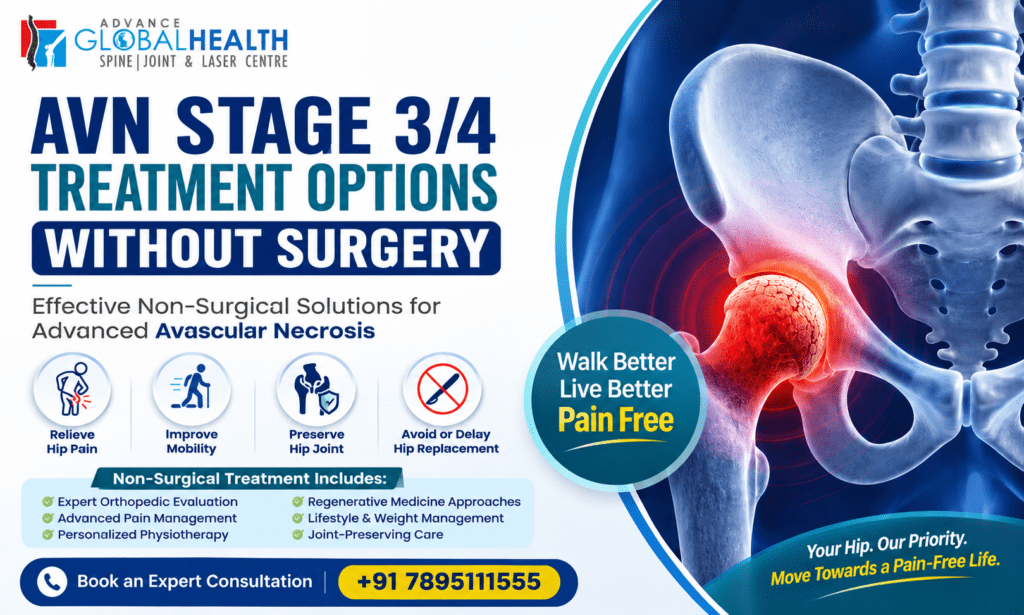
Avascular Necrosis (AVN), also known as osteonecrosis, is a progressive condition that occurs when the blood supply to a bone is reduced or interrupted, causing bone tissue to die. The hip joint (femoral head) is the most commonly affected area. As AVN advances to Stage 3 or Stage 4, many patients fear that hip replacement is their only option.
While total hip replacement is often recommended for advanced AVN with significant joint collapse and severe arthritis, treatment decisions should always be individualized. Depending on the extent of damage, symptoms, overall health, and functional goals, some patients may benefit from comprehensive non-surgical management to reduce pain, improve mobility, and enhance quality of life.
At Advance Global Health, we believe every patient deserves a detailed evaluation before deciding on surgery.
People Also Like to read this: Avoid Knee Replacement Surgery: Non-Surgical Alternatives Explained
Understanding AVN Stage 3 and Stage 4
AVN progresses through different stages.
Stage 3 AVN
- Early collapse of the femoral head begins.
- The joint surface starts losing its normal shape.
- Pain becomes more frequent.
- Walking may become difficult.
- MRI and X-rays usually show structural changes.
Stage 4 AVN
- Significant collapse of the femoral head.
- Secondary osteoarthritis develops.
- Cartilage damage becomes severe.
- Persistent pain affects daily activities.
- Joint movement becomes increasingly restricted.
At these stages, treatment focuses on preserving function, relieving pain, and improving mobility.
Is Surgery Always Necessary?
Not always.
Although many patients with advanced AVN eventually require hip replacement surgery, not every patient is an immediate surgical candidate. AVN Treatment without surgery
Non-surgical management may be considered when:
- Surgery is not medically suitable.
- The patient prefers to delay surgery after discussing risks and benefits.
- Symptoms are manageable with conservative treatment.
- The goal is to improve function and quality of life while monitoring disease progression.
A consultation with an orthopedic specialist is essential to determine the most appropriate treatment plan.
Non-Surgical Treatment Options for Stage 3/4 AVN
1. Comprehensive Orthopedic Evaluation
Treatment begins with a detailed assessment that may include:
- Clinical examination
- X-rays
- MRI
- Walking assessment
- Pain evaluation
- Functional assessment
This helps determine the extent of joint damage and guides treatment planning.
2. Pain Management
Managing pain is one of the primary goals.
Depending on the patient’s condition, healthcare professionals may recommend:
- Appropriate pain-relieving medications
- Anti-inflammatory medications when indicated
- Activity modification to reduce stress on the hip
Medication should always be taken under medical supervision.
3. Structured Physiotherapy
Physiotherapy plays an important role in maintaining mobility.
A personalized rehabilitation program may help:
- Improve muscle strength
- Maintain joint flexibility
- Improve walking ability
- Reduce stiffness
- Enhance balance
Exercises should always be tailored to the individual’s condition.
4. Weight Management
Reducing excess body weight decreases stress on the hip joint.
Benefits include:
- Less pain during walking
- Improved mobility
- Reduced pressure on damaged bone
- Better overall joint function
5. Walking Aids
Using a cane or walker may:
- Reduce weight-bearing on the affected hip
- Improve balance
- Decrease pain while walking
- Lower the risk of falls
Many patients experience improved confidence during daily activities with appropriate support.
6. Lifestyle Modifications
Simple lifestyle changes may help reduce symptoms.
These include:
- Avoiding prolonged standing
- Limiting high-impact activities
- Choosing low-impact exercises
- Maintaining good posture
- Following a healthy diet
- Avoiding smoking and excessive alcohol consumption
7. Regenerative Medicine Approaches
For carefully selected patients, regenerative medicine approaches may be considered as part of a comprehensive treatment plan.
Their suitability depends on:
- Stage of AVN
- Degree of bone collapse
- Overall hip condition
- Current clinical evidence
Patients should discuss the potential benefits and limitations of these therapies with an experienced orthopedic specialist.
When Is Hip Replacement Recommended?
Despite advances in conservative care, hip replacement remains the most effective treatment for many patients with:
- Extensive femoral head collapse
- Severe osteoarthritis
- Persistent disabling pain
- Marked loss of hip function
- Failure of appropriate non-surgical treatment
The decision should always be based on clinical examination, imaging findings, and the patient’s personal goals.
Can You Delay Hip Replacement?
In some patients, appropriate non-surgical treatment may help:
- Reduce pain
- Improve walking ability
- Maintain independence
- Enhance quality of life
- Delay surgery where clinically appropriate
However, delaying surgery is not suitable for everyone, particularly if significant joint damage continues to progress.
Why Early Diagnosis Matters
Patients diagnosed during Stage 1 or Stage 2 AVN generally have more joint-preserving treatment options.
If hip pain is ignored until Stage 3 or Stage 4, treatment choices become more limited.
Early evaluation can improve long-term outcomes and help preserve joint function whenever possible.
How Advance Global Health Can Help
At Advance Global Health, we provide comprehensive evaluation and personalized care for patients with Avascular Necrosis (AVN) and other orthopedic conditions. Our specialists carefully assess each patient’s symptoms, imaging findings, and overall health before recommending treatment.
Depending on the stage of AVN and individual needs, treatment may include:
- Advanced non-surgical pain management
- Structured physiotherapy and rehabilitation
- Lifestyle and weight management guidance
- Regenerative medicine approaches where clinically appropriate
- Joint-preserving strategies whenever feasible
Hip replacement surgery is recommended only when it is medically indicated and when conservative treatment is unlikely to provide sufficient benefit.
Conclusion
A diagnosis of Stage 3 or Stage 4 AVN does not automatically mean immediate hip replacement surgery. While surgery remains the standard treatment for many patients with advanced disease, comprehensive non-surgical care may help improve pain, mobility, and quality of life in selected cases.
If you have persistent hip pain, stiffness, or difficulty walking, consult the orthopedic specialists at Advance Global Health for a thorough evaluation and a personalized treatment plan based on your condition and treatment goals.
Early assessment and evidence-based care can help you make informed decisions about managing AVN and protecting your joint health.
