
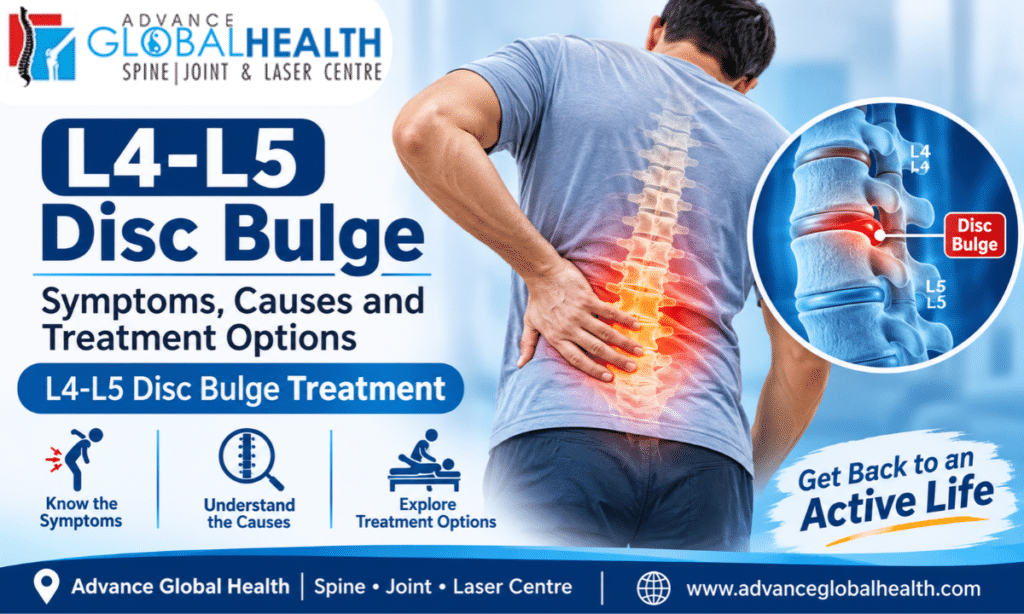
Lower back pain is a common problem that can affect daily activities, work and mobility. One possible cause is an L4-L5 disc bulge, a condition involving the intervertebral disc between the fourth and fifth lumbar vertebrae in the lower back. Depending on its size and location, a disc bulge may cause back pain, stiffness, tingling or pain that travels down the leg.
At Advance Global Health – Spine, Joint & Laser Centre, patients can explore assessment, rehabilitation and appropriate treatment options for spine-related conditions. Understanding the symptoms and causes of an L4-L5 disc bulge is an important first step toward managing discomfort and improving function.
People Also Like to read this: AVN Specialist Doctor in Delhi: Dr. Hara Prasad at Advance Global Health
What Is an L4-L5 Disc Bulge?
The spine contains small bones called vertebrae, separated by cushioning discs that help absorb pressure and support movement. The L4-L5 disc lies in the lower lumbar region, which carries a substantial amount of the body’s weight.
A disc bulge occurs when the outer portion of a disc extends beyond its usual boundary. In some cases, the bulging disc may irritate or compress nearby nerves. However, not every disc bulge causes symptoms; some are discovered incidentally during an MRI scan.
When a nerve is affected, symptoms may extend from the lower back into the buttock, thigh, leg or foot. The precise pattern depends on the location and degree of nerve involvement.
Common Symptoms of an L4-L5 Disc Bulge
Symptoms vary from person to person. Some individuals experience only mild back discomfort, while others develop nerve-related symptoms.
Common signs include:
- Lower back pain: A dull ache or sharp discomfort around the lumbar spine.
- Leg pain: Pain that travels from the lower back or buttock into one leg.
- Tingling or numbness: Unusual sensations in the leg or foot.
- Muscle weakness: Difficulty lifting the front of the foot or big toe in some cases of nerve involvement.
- Stiffness: Discomfort during bending, sitting or changing position.
- Pain during activity: Symptoms may increase with certain movements, coughing or sneezing.
Persistent symptoms, especially those accompanied by weakness or numbness, should be assessed by a qualified healthcare professional.
What Causes an L4-L5 Disc Bulge?
An L4-L5 disc bulge can develop due to several factors, including gradual changes in the discs over time.
1. Age-Related Disc Changes
As people age, spinal discs may lose some of their water content and flexibility. This can make them more vulnerable to bulging or other degenerative changes.
2. Prolonged Sitting
Sitting for long periods, particularly with inadequate movement breaks, may aggravate existing back discomfort. Poor posture alone does not necessarily cause a disc bulge, but prolonged static positions can contribute to symptoms.
3. Improper Lifting Techniques
Repeated heavy lifting, especially when combined with twisting or sudden movements, may place additional stress on the lower back.
4. Repetitive Physical Strain
Certain work activities and sports involve repeated bending, lifting or loading of the lumbar spine. These activities may aggravate back symptoms in susceptible individuals.
5. Previous Back Injury
An injury or repeated episodes of back pain may contribute to symptoms and prompt further investigation.
Other factors, including smoking, reduced physical activity and higher body weight, may influence spinal health and recovery.
How Is an L4-L5 Disc Bulge Diagnosed?
An accurate diagnosis involves more than identifying a disc bulge on an MRI. A healthcare professional will review symptoms, medical history and physical examination findings to determine whether the imaging abnormality is likely to explain the patient’s condition.
Assessment may include:
- Reviewing the location and duration of pain
- Checking muscle strength, sensation and reflexes
- Assessing walking and movement
- Performing nerve-tension tests where appropriate
- Reviewing MRI or other imaging when indicated
An MRI may be recommended when symptoms persist, neurological signs are present, or the results are likely to change treatment decisions. Imaging findings should always be interpreted alongside the clinical examination.
L4-L5 Disc Bulge Treatment Options
The right L4-L5 Disc Bulge Treatment depends on symptom severity, nerve involvement, functional limitations and the patient’s overall health. Many people improve with conservative treatment and do not require surgery.
1. Physiotherapy and Rehabilitation
Physiotherapy may help reduce disability, improve mobility and build strength. Depending on the individual’s condition, a rehabilitation programme may include:
- Gentle mobility exercises
- Core and trunk strengthening
- Gradual walking and activity progression
- Movement-control exercises
- Education about lifting and daily activities
Exercises should be selected according to the patient’s symptoms and abilities. Movements that significantly increase radiating leg pain or neurological symptoms should be reviewed with the treating professional.
2. Activity Modification
Extended bed rest is generally not recommended for uncomplicated lower back pain. Staying gently active within comfortable limits can support recovery.
Patients may benefit from changing positions regularly, taking short walking breaks, temporarily reducing heavy lifting and gradually returning to normal activities.
3. Medication and Pain Management
A clinician may recommend suitable pain-relief medication based on the patient’s symptoms, medical history and potential side effects. Medication should not be started or continued without appropriate advice, particularly when other health conditions or medicines are involved.
Pain management can make it easier to remain active and participate in rehabilitation, but it does not necessarily change the disc’s structure.
4. Spinal Decompression and Other Treatment Technologies
Some clinics offer spinal decompression or other technology-assisted treatments for selected patients. The evidence for these approaches varies, and benefits are not guaranteed for every disc bulge.
Patients should ask about the expected benefit, potential risks, evidence supporting the treatment and whether it is appropriate for their specific diagnosis. Laser-based or other device-assisted therapies should not be assumed to repair a disc or eliminate nerve compression.
5. When Is Surgery Considered?
Surgery is not necessary for every L4-L5 disc bulge. A spine specialist may consider surgical treatment when there is significant nerve compression with persistent disabling symptoms despite appropriate conservative care, or when serious neurological problems develop.
The decision depends on the examination, imaging findings, symptom severity and overall clinical picture.
Can an L4-L5 Disc Bulge Heal Without Surgery?
Many people with symptomatic disc bulges improve without surgery. Symptoms can settle as inflammation decreases, surrounding tissues recover and daily movement becomes easier. Some disc changes may also become less prominent over time.
However, recovery differs between individuals. A disc bulge visible on an MRI may remain even when symptoms improve, and not every case can be managed successfully with conservative treatment alone.
Early assessment, appropriate rehabilitation and follow-up when needed can help patients understand their options and avoid treatments that are unlikely to benefit them.
Exercises and Lifestyle Tips for Lower Back Health
Helpful habits may include:
- Taking regular movement breaks during desk work
- Walking regularly within comfortable limits
- Gradually strengthening the trunk and hip muscles
- Using safe lifting techniques
- Maintaining a sustainable, healthy body weight
- Getting adequate sleep and avoiding smoking
There is no single exercise routine suitable for every L4-L5 disc bulge. People with radiating pain, numbness or weakness should obtain individualized exercise guidance.
When Should You Seek Medical Attention?
Arrange a medical assessment if back pain persists, repeatedly returns, travels down the leg or interferes with daily activities.
Seek emergency medical care if you develop new difficulty controlling your bladder or bowel, inability to urinate, numbness around the groin or saddle area, or rapidly worsening or severe leg weakness. These symptoms may indicate serious nerve compression that requires urgent evaluation.
L4-L5 Disc Bulge Care at Advance Global Health
Advance Global Health – Spine, Joint & Laser Centre provides spine and joint care, including assessment and rehabilitation options for people experiencing back pain and related mobility concerns.
If you are considering L4-L5 Disc Bulge Treatment, discuss your symptoms, diagnostic reports and treatment goals with an appropriately qualified clinician. The treatment plan should be based on your examination and the cause of your symptoms, rather than the MRI report alone.
Conclusion
An L4-L5 disc bulge can cause lower back pain, leg discomfort, tingling or weakness when nearby nerves are affected. However, some disc bulges cause no symptoms, and many symptomatic cases improve with appropriate conservative care.
Understanding the condition, remaining appropriately active and following an individualized rehabilitation plan can support recovery. Surgery may be necessary in selected cases, particularly when serious or persistent nerve compression is present.
For persistent back pain or symptoms associated with an L4-L5 disc bulge, seek professional assessment to understand the most appropriate treatment options for your condition.

Pingback: Hip Arthritis Treatment Without Surgery: Options & Benefits