When the Brain Stops Communicating with the Body
A stroke, spinal cord injury, traumatic brain injury, Parkinson’s disease, or other neurological condition can interrupt the communication between the brain, nerves, and muscles. The result may include weakness, paralysis, balance problems, muscle stiffness, loss of coordination, and reduced independence.
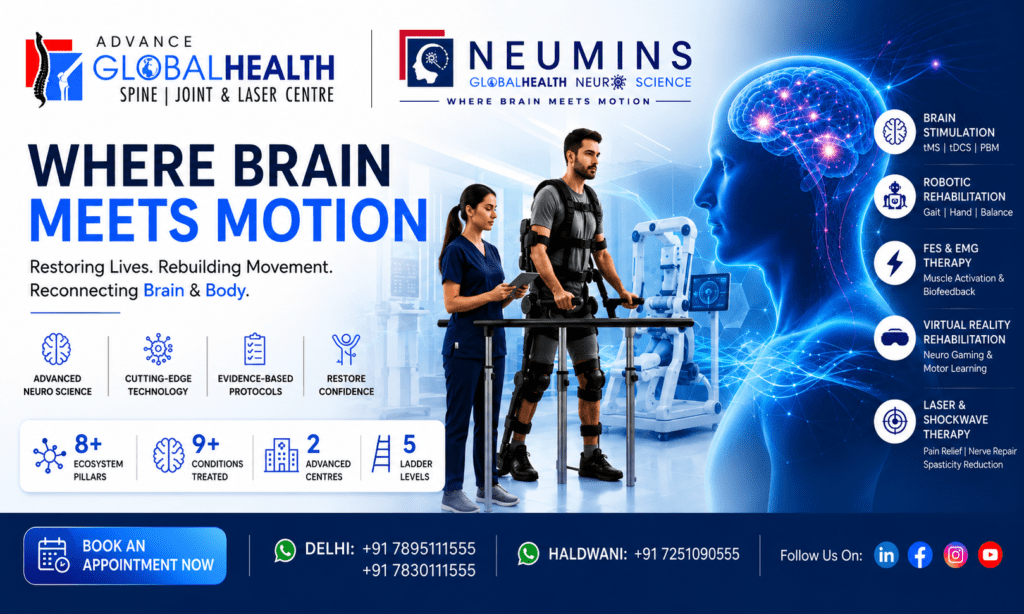
Traditional rehabilitation often focuses on strengthening muscles. Modern neuro-rehabilitation goes further by helping the brain rebuild the neural pathways responsible for movement. At NEUMINS, this philosophy forms the foundation of our approach: we don’t just treat symptoms, we retrain the brain to move again.
People Also Like to read this: Sciatica Pain Treatment Without Surgery
Understanding Neuroplasticity
The human brain has an extraordinary ability called neuroplasticity, which allows it to reorganize itself after injury by creating new neural connections.
Neuroplasticity helps the brain:
- Form new neural pathways
- Strengthen weak circuits
- Restore communication between nerves and muscles
- Improve movement, balance, coordination, and daily function
Every successful rehabilitation program is built around stimulating this natural healing process.
The Four Pillars of Recovery
Recovery at NEUMINS is structured around four interconnected goals.
1. Reactivating Neural Pathways
Dormant neurons are stimulated using advanced brain stimulation technologies to reactivate communication within the nervous system.
2. Stimulating Nerve Repair
Laser therapy, shockwave technology, and biological stimulation help improve circulation, support tissue repair, and promote healthier nerve function.
3. Restoring Functional Movement
Functional Electrical Stimulation (FES), EMG biofeedback, and robotic rehabilitation help muscles relearn purposeful movement.
4. Retraining the Brain
Thousands of task-specific, repetitive movements encourage the brain to develop stronger and more efficient movement pathways.
Advanced Technologies Used in Neuro-Rehabilitation
Modern recovery combines multiple technologies working together.
Robotic Gait Training
Provides highly repetitive, accurate walking practice to improve gait, balance, and coordination.
Functional Electrical Stimulation (FES)
Uses electrical stimulation to activate weak muscles and improve brain-muscle communication.
Brain Stimulation (rTMS / tDCS)
Non-invasive stimulation techniques designed to activate dormant cortical networks.
Virtual Reality Rehabilitation
Interactive rehabilitation exercises improve motor learning, coordination, and cognitive engagement.
Brain-Computer Interface (BCI)
Advanced systems translate brain signals into assisted movement, encouraging motor recovery.
Laser Neuromodulation & Shockwave Therapy
Helps reduce spasticity, enhance circulation, and prepare tissues for rehabilitation.
The Five Stages of Functional Recovery
Recovery is a gradual process that follows five major milestones.
Stage 1: Neuro Activation
Wake up weak or inactive neural pathways.
Stage 2: Neuro Re-Linking
Reconnect brain, nerves, and muscles through robotics, FES, and laser therapy.
Stage 3: Mobility Restoration
Improve walking, posture, balance, coordination, and hand function.
Stage 4: Activities of Daily Living
Regain independence in eating, dressing, standing, stepping, and personal care.
Stage 5: Independence & Confidence
Return to work, social participation, and long-term functional independence.
Who Can Benefit?
Advanced neuro-rehabilitation may help patients with:
- Stroke
- Parkinson’s disease
- Spinal Cord Injury
- Traumatic Brain Injury
- Cerebral Palsy
- Hemiplegia
- Paraplegia
- Multiple Sclerosis
- Peripheral Nerve Injury
- Guillain-Barré Syndrome (GBS)
- Ataxia
- Neuropathy
Why a Multi-Technology Approach Matters
Each technology targets a different part of the recovery process.
- Brain stimulation activates dormant neurons.
- Robotics provides thousands of movement repetitions.
- FES strengthens muscle activation.
- Laser therapy supports tissue healing.
- VR improves motor learning.
- AI tracking helps monitor progress.
Together, these technologies create a comprehensive rehabilitation pathway rather than relying on a single therapy.
Recovery Is More Than Movement
The ultimate goal of neuro-rehabilitation is not simply stronger muscles. It is restoring confidence, independence, and quality of life by rebuilding the connection between the brain and body.
At NEUMINS, advanced technology, evidence-based protocols, and personalized rehabilitation plans work together to help patients achieve meaningful functional recovery.
