
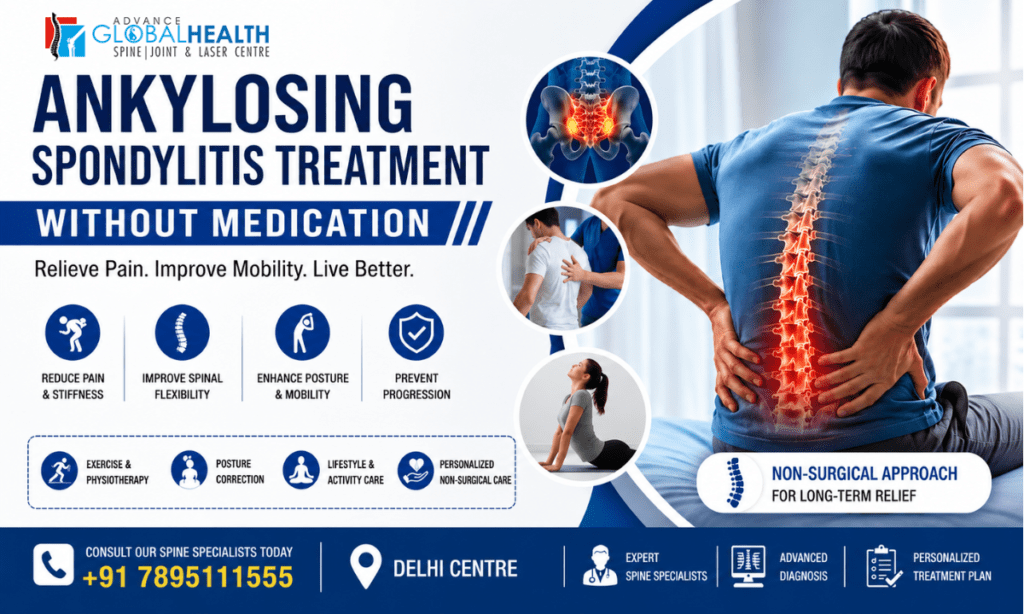
Ankylosing spondylitis (AS) is a chronic inflammatory condition that mainly affects the spine and the joints connecting the spine to the pelvis. It can cause persistent back pain, stiffness, and reduced flexibility. For many people, symptoms are worse in the morning or after long periods of inactivity and may improve with movement. Over time, inflammation can affect spinal mobility and, in some cases, lead to fusion of parts of the spine.
Because of this, many patients search online for ankylosing spondylitis treatment without medication. The important point is that non-medical approaches can play an important role in symptom management and mobility, but ankylosing spondylitis is a chronic inflammatory disease and treatment should be individually planned by a qualified healthcare professional. Current medical guidance commonly includes exercise and physiotherapy, while medication may also be needed for controlling inflammation in many patients.
People Also Like to read this: Knee Arthritis Treatment: Causes, Symptoms & Effective Management | Advance Global Health
What Is Ankylosing Spondylitis?
Ankylosing spondylitis is a type of axial spondyloarthritis. It primarily affects the spine and sacroiliac joints. Common symptoms include lower back pain, morning stiffness, hip or buttock pain, and reduced spinal movement. Some people may also experience fatigue or symptoms affecting areas outside the spine.
Early diagnosis is important because the condition can progress differently from one person to another. Diagnosis may involve a clinical examination, imaging such as X-rays or MRI, and other investigations as advised by a specialist. If an X-ray does not confirm AS, MRI may help identify inflammation in the sacroiliac joints.
Can Ankylosing Spondylitis Be Treated Without Medication?
The answer depends on the stage and activity of the disease. Ankylosing spondylitis treatment without medication should not mean ignoring inflammation or stopping prescribed medicines without medical advice.
However, non-medical care can be an important part of a comprehensive treatment plan. The main goals are to maintain spinal movement, improve posture, support strength, and help patients remain physically active.
1. Exercise and Movement
Regular, appropriate movement is one of the most important parts of AS care. Keeping active may help improve posture and range of spinal movement and can help reduce stiffness. Exercise should be selected according to the individual’s symptoms and physical ability.
A personalised exercise program may include:
- Spinal mobility exercises
- Posture-focused exercises
- Flexibility work
- Strengthening exercises
- Breathing exercises
- Low-impact physical activity
The right program should be designed according to the patient’s condition. Overexertion or exercises performed incorrectly may worsen symptoms.
2. Physiotherapy and Rehabilitation
Physiotherapy is a key component of ankylosing spondylitis management. A physiotherapist can assess mobility and posture and create an exercise program suited to the patient’s needs. Physiotherapy may help improve range of movement, strength, and overall mobility.
A structured rehabilitation plan may focus on:
- Maintaining spinal flexibility
- Improving posture
- Strengthening supportive muscles
- Improving functional movement
- Supporting daily activities
This is why ankylosing spondylitis treatment in India is increasingly moving toward personalised and multidisciplinary care rather than a one-size-fits-all approach.
3. Posture Correction
Poor posture can place additional stress on the spine and may contribute to functional limitations. Posture assessment and corrective exercises can help patients understand how they sit, stand, and move.
A professional may guide you on:
- Sitting posture
- Sleeping positions
- Workplace ergonomics
- Safe lifting techniques
- Daily movement habits
Posture care is especially important for patients who spend long hours sitting or working at a desk.
4. Mobility and Flexibility Training
Stiffness is one of the common challenges of AS. A supervised mobility program can help patients work on safe spinal and joint movement.
The purpose is not to force the spine but to maintain functional movement within safe limits. Exercises should be performed under appropriate guidance, particularly when pain or significant stiffness is present.
5. Breathing and Chest Mobility Exercises
Ankylosing spondylitis can sometimes affect the joints around the chest and ribs, which may make deep breathing more difficult in advanced disease. Mobility and breathing exercises may be included in a personalised rehabilitation program when clinically appropriate.
6. Lifestyle and Activity Management
Managing daily activity is also important. Patients may benefit from balancing activity with appropriate rest and avoiding prolonged inactivity. Staying physically active is generally an important part of AS management, although the intensity and type of exercise should be personalised.
What Is the Role of Non-Surgical Treatment?
Many people searching for ankylosing spondylitis treatment without medication are also looking for a non-surgical approach. The focus of non-surgical care is generally on managing symptoms, improving mobility, and supporting daily function.
At Advance Global Health Spine | Joint & Laser Centre, treatment planning begins with a detailed assessment of the patient’s symptoms, mobility, and spine condition. The centre’s ankylosing spondylitis care information describes a personalised, non-surgical approach focused on symptom management and daily functioning.
How Advance Global Health Can Help
At Advance Global Health Spine | Joint & Laser Centre, patients with suspected or diagnosed ankylosing spondylitis can undergo a comprehensive evaluation to understand their condition and treatment needs.
The assessment may include:
- Detailed clinical evaluation
- Review of available X-rays or MRI reports
- Spine mobility assessment
- Posture evaluation
- Functional movement assessment
- Review of pain and stiffness patterns
Based on the findings, a personalised treatment plan may be recommended. The goal is to help patients improve mobility, manage stiffness, and support better day-to-day function.
Patients searching for ankylosing spondylitis treatment in Delhi or ankylosing spondylitis treatment in India should understand that treatment should be based on an accurate diagnosis and individual assessment—not just online claims about a particular therapy.
Important: Do Not Stop Prescribed Medication Without Medical Advice
Although this blog discusses ankylosing spondylitis treatment without medication, it is important to be medically responsible. Major medical sources note that treatment for AS often includes medication and physical therapy, and medication may be necessary to control inflammation or disease activity in some patients.
Therefore, never stop prescribed medication suddenly or replace medical treatment without consulting your doctor.
Final Thoughts
Ankylosing spondylitis treatment without medication may involve exercise, physiotherapy, posture correction, mobility training, and lifestyle management. These approaches can be valuable for maintaining movement and supporting function. However, because AS is a chronic inflammatory condition, every patient requires an individual treatment plan.
If you are suffering from persistent back pain, morning stiffness, or reduced spinal movement, early evaluation is important. Advance Global Health Spine | Joint & Laser Centre offers personalised spine care and non-surgical treatment planning for patients looking for ankylosing spondylitis treatment in Delhi and India.
🌐 Website: Advance Global Health
Disclaimer: This blog is for educational purposes only and does not replace medical advice. Ankylosing spondylitis treatment should be planned after proper evaluation by a qualified healthcare professional. Do not stop prescribed medication without consulting your doctor.
