
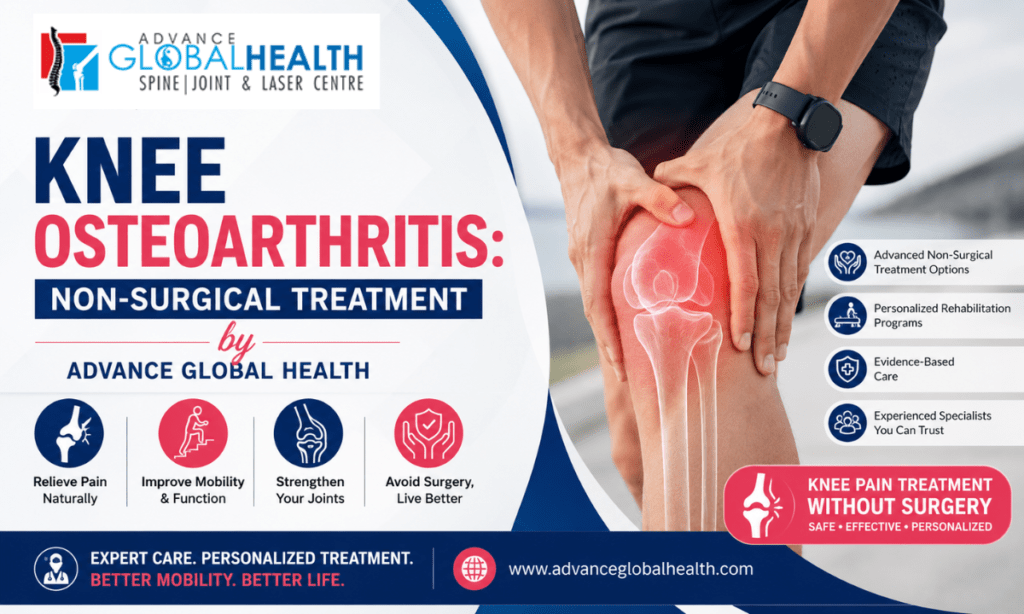
Knee osteoarthritis (OA) is one of the most common causes of chronic knee pain, especially among adults over the age of 40. It develops when the cartilage that cushions the knee joint gradually wears down, leading to pain, stiffness, swelling, and difficulty performing everyday activities. Many patients believe that surgery is the only solution, but that is not always the case.
If you’re searching for knee pain treatment without surgery or knee osteoarthritis treatment without surgery, it’s important to know that many patients can benefit from conservative treatment depending on the severity of their condition. At Advance Global Health Spine | Joint & Laser Centre, every patient undergoes a detailed evaluation to determine the most appropriate treatment plan, with a focus on non-surgical care whenever medically appropriate.
People Also Like to read this: Ankylosing Spondylitis Treatment Without Medication
What Is Knee Osteoarthritis?
Knee osteoarthritis is a degenerative joint disease in which the protective cartilage covering the ends of the bones gradually deteriorates. As the cartilage becomes thinner, bones may rub against each other, causing pain, swelling, stiffness, and reduced joint function.
The condition develops gradually and may affect one or both knees.
Common Symptoms of Knee Osteoarthritis
If you have knee OA, you may experience:
- Persistent knee pain
- Morning stiffness lasting several minutes
- Pain while walking or climbing stairs
- Swelling around the knee
- Cracking or grinding sounds during movement
- Reduced flexibility
- Difficulty standing after sitting
- Weakness around the knee joint
- Difficulty performing daily activities
Symptoms may worsen over time if left untreated.
Causes and Risk Factors
Several factors can contribute to knee osteoarthritis, including:
- Increasing age
- Obesity
- Previous knee injury
- Sports injuries
- Family history
- Weak muscles around the knee
- Repetitive stress on the knee joint
- Poor joint alignment
Understanding the underlying cause helps create an effective treatment plan.
Can Knee Osteoarthritis Be Treated Without Surgery?
Yes. Many patients with mild to moderate knee osteoarthritis improve with knee osteoarthritis treatment without surgery. Conservative management often focuses on relieving symptoms, improving mobility, and maintaining joint function.
However, the right treatment depends on:
- Severity of cartilage damage
- Pain intensity
- Functional limitations
- Overall health
- Imaging findings (X-ray or MRI when required)
Patients with advanced disease may still require surgical consultation, but non-surgical treatment is often the first approach.
Non-Surgical Knee Pain Treatment Options
1. Comprehensive Clinical Evaluation
At Advance Global Health, treatment begins with identifying the root cause of knee pain through:
- Detailed medical history
- Physical examination
- Walking pattern assessment
- Joint mobility testing
- Review of X-rays or MRI if available
Accurate diagnosis is essential before starting treatment.
2. Personalized Rehabilitation
Rehabilitation is an important part of knee pain treatment without surgery.
The rehabilitation program may include:
- Knee mobility exercises
- Muscle strengthening
- Balance training
- Functional movement exercises
- Flexibility improvement
The objective is to improve movement and help patients perform daily activities more comfortably.
3. Muscle Strengthening
Strong muscles help reduce stress on the knee joint.
A supervised exercise program may focus on strengthening:
- Quadriceps
- Hamstrings
- Hip muscles
- Core muscles
Exercise programs should always be individualized.
4. Weight Management
Excess body weight increases pressure on the knee joint.
Maintaining a healthy weight may help:
- Reduce joint stress
- Improve walking ability
- Support long-term knee health
5. Posture and Gait Correction
Poor posture and abnormal walking patterns may increase pressure on the knee.
Specialists evaluate:
- Walking pattern
- Joint alignment
- Standing posture
- Functional movement
Small corrections can improve movement efficiency.
6. Lifestyle Modifications
Simple lifestyle changes often support recovery.
Patients are advised to:
- Stay physically active
- Avoid prolonged sitting
- Choose low-impact activities
- Wear supportive footwear
- Avoid unnecessary strain on the knees
7. Pain Management
Doctors may recommend medication when necessary to help manage pain or inflammation. Medication should always be taken under medical supervision and tailored to the patient’s condition.
When Is Surgery Needed?
Although many patients improve with conservative care, surgery may be considered if:
- Severe cartilage loss is present
- Pain significantly limits daily life
- Knee instability becomes severe
- Conservative treatment has not been effective
The decision should always be based on a thorough evaluation by an orthopedic specialist.
How Advance Global Health Can Help
At Advance Global Health Spine | Joint & Laser Centre, patients receive individualized care based on their symptoms and diagnosis.
The treatment process includes:
Comprehensive Assessment
- Detailed knee examination
- Medical history review
- Mobility assessment
- Functional movement analysis
- Imaging review (if available)
Personalized Treatment Planning
Each treatment plan is customized according to:
- Age
- Activity level
- Arthritis stage
- Pain severity
- Mobility limitations
The focus is on improving knee function and enhancing quality of life through evidence-based, non-surgical management whenever appropriate.
Why Choose Advance Global Health?
Patients choose Advance Global Health because of its patient-centered approach and comprehensive joint care.
Benefits include:
- Experienced spine and joint specialists
- Comprehensive knee evaluation
- Personalized treatment plans
- Advanced rehabilitation programs
- Focus on knee pain treatment without surgery
- Focus on knee osteoarthritis treatment without surgery
- Functional mobility assessment
- Posture and gait analysis
Long-term follow-up care - Modern treatment facilities
Tips to Protect Your Knees
Along with professional treatment, these habits may help support knee health:
- Maintain a healthy body weight.
- Exercise regularly with low-impact activities.
- Strengthen your leg muscles.
- Avoid prolonged kneeling or squatting.
- Stretch before and after exercise.
- Wear supportive footwear.
- Use proper lifting techniques.
- Stay active without overloading the knee joint.
Conclusion
Living with knee osteoarthritis does not always mean surgery is inevitable. Many patients experience improved mobility and symptom relief through knee pain treatment without surgery when the condition is diagnosed early and managed with an individualized treatment plan.
If you’re experiencing persistent knee pain, stiffness, or difficulty walking, seeking an expert evaluation is the first step toward finding the most appropriate treatment.
At Advance Global Health Spine | Joint & Laser Centre, specialists provide comprehensive assessments and personalized knee osteoarthritis treatment without surgery whenever clinically appropriate. Their goal is to help patients reduce pain, improve movement, and maintain an active lifestyle with evidence-based, patient-focused care.
Book a consultation today to learn more about your treatment options.
Website: https://advanceglobalhealth.com
Disclaimer: This article is for educational purposes only and should not be considered medical advice. Treatment recommendations vary depending on individual diagnosis, severity of osteoarthritis, and overall health. Always consult a qualified healthcare professional for a personalized treatment plan.
