
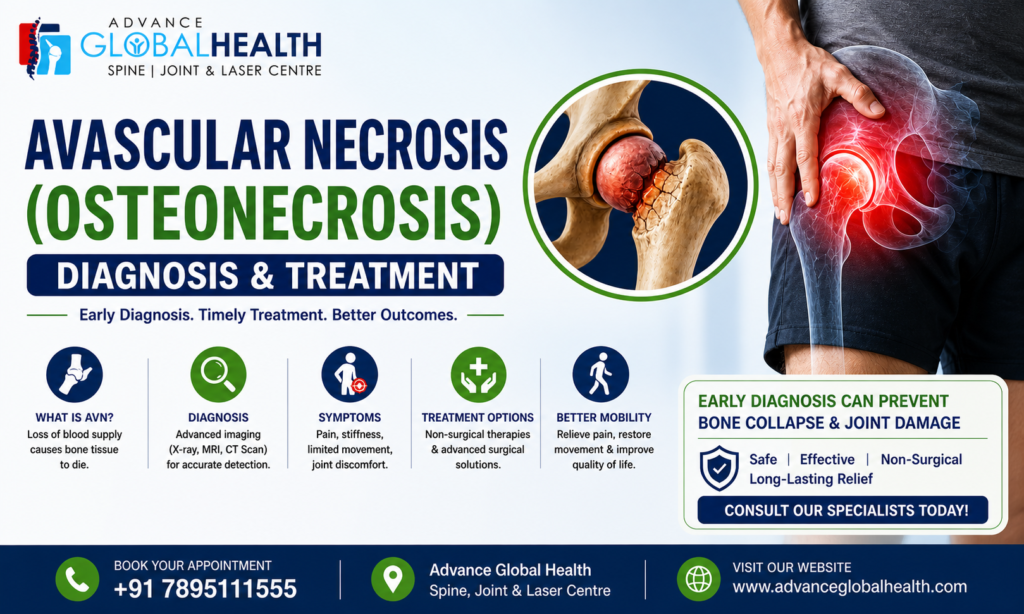
Avascular Necrosis (AVN), also known as osteonecrosis, is a serious bone condition that occurs when the blood supply to a bone is reduced or completely blocked. Without adequate blood flow, bone tissue begins to die, causing the bone to weaken and eventually collapse. This condition most commonly affects the hip joint, but it can also impact the knees, shoulders, and ankles.
If left untreated, avascular necrosis can lead to severe pain, restricted movement, and permanent joint damage. However, with early diagnosis and advanced treatment options available at Advance Global Health – Spine, Joint & Laser Centre, patients can manage AVN effectively and often avoid surgery.
People Also Like to read this: Knee Arthritis Treatment Without Surgery: Effective Knee Pain Treatment
What is Avascular Necrosis (Osteonecrosis)?
Avascular Necrosis literally means “death of bone tissue due to lack of blood supply.”
Bones require a continuous blood supply to remain healthy and regenerate. When this supply is interrupted, bone cells begin to die, causing structural weakness. Over time, the affected bone may collapse, leading to arthritis and severe joint dysfunction.
Common Areas Affected by AVN
AVN can affect several joints, but the most commonly affected areas include:
- Hip (Femoral Head) – Most common
- Knee
- Shoulder
- Ankle
- Wrist
The hip joint is particularly vulnerable because it relies on a delicate blood supply.
Causes of Avascular Necrosis
Several factors can contribute to AVN:
1. Trauma or Injury
A fracture or dislocation can damage nearby blood vessels.
2. Long-Term Steroid Use
Corticosteroids can increase fat deposits in blood vessels, restricting blood flow.
3. Excessive Alcohol Consumption
Alcohol can lead to fatty deposits that block circulation.
4. Medical Conditions
Certain conditions increase AVN risk, such as:
- Sickle cell disease
- Lupus
- Diabetes
- Blood clotting disorders
Symptoms of Avascular Necrosis
In the early stages, AVN may not cause noticeable symptoms. As it progresses, patients often experience:
Early Symptoms:
- Mild joint discomfort
- Pain during activity
Advanced Symptoms:
- Persistent pain even at rest
- Stiffness
- Reduced range of motion
- Difficulty walking
- Limping
For hip AVN, pain is usually felt in:
- Groin
- Buttocks
- Thigh
Early diagnosis is crucial for preventing bone collapse.
Diagnosis of Avascular Necrosis
At Advance Global Health, diagnosing AVN involves a thorough evaluation.
1. Medical History Review
Doctors assess:
- Symptoms
- Lifestyle habits
- Steroid use
- Previous injuries
2.Physical Examination
The affected joint is examined for:
- Tenderness
- Limited mobility
- Pain response
3. Imaging Tests
X-rays
Used to detect bone changes in later stages.
MRI Scan
The most effective tool for early diagnosis.
MRI can identify AVN before bone collapse occurs.
CT Scan
Provides detailed bone structure images.
Bone Scan
Helps detect reduced blood flow.
Accurate diagnosis allows for timely treatment planning.
Treatment of Avascular Necrosis
Treatment depends on:
- Stage of AVN
- Joint affected
- Severity of damage
At Advance Global Health, advanced non-surgical treatment options are available to help patients recover naturally.
Non-Surgical Treatments for AVN
1. Advanced Biophysical Joint Preservation
Advanced Biophysical Joint Preservation is a highly effective treatment for AVN.
How It Works:
Focused laser energy penetrates deep into tissues, stimulating healing.
Benefits:
- Improves blood circulation
- Reduces inflammation
- Promotes bone regeneration
- Relieves pain
This therapy is especially effective in early-stage AVN.
2. Shockwave Advanced Biophysical Joint Preservation
Shockwave Advanced Biophysical Joint Preservation uses acoustic waves to activate healing responses.
Benefits:
- Stimulates new blood vessel formation
- Enhances tissue repair
- Improves mobility
- Reduces pain
This treatment supports natural recovery.
3. Physiotherapy
Physical therapy helps strengthen surrounding muscles and improve joint function.
Benefits:
- Better mobility
- Reduced stiffness
- Enhanced stability
4. Lifestyle Modification
- Patients are advised to:
- Reduce weight-bearing activities
- Avoid alcohol
- Stop smoking
- Maintain a healthy diet
These changes improve treatment effectiveness.
Surgical Treatment Options
When AVN is diagnosed late and bone collapse has occurred, surgery may be required.
Common Surgical Options:
- Core decompression
- Bone grafting
- Joint replacement
However, early diagnosis can often eliminate the need for surgery.
Why Early Treatment Matters
Delaying treatment can lead to:
- Bone collapse
- Severe arthritis
- Permanent joint damage
- Need for replacement surgery
The earlier AVN is treated, the better the chances of preserving the natural joint.
Why Choose Advance Global Health?
Advance Global Health – Spine, Joint & Laser Centre offers comprehensive care for AVN patients.
Key Advantages:
- Advanced non-surgical therapies
- Expert specialists
- Personalized treatment plans
- Modern technology
- Focus on natural healing
The goal is to restore joint health while avoiding invasive procedures whenever possible.
Preventing Avascular Necrosis
While not all cases can be prevented, these steps reduce risk:
- Limit alcohol consumption
- Avoid unnecessary steroid use
- Maintain healthy cholesterol levels
- Stay physically active
- Seek prompt treatment for injuries
Conclusion
Avascular Necrosis (osteonecrosis) is a serious condition, but early diagnosis and proper treatment can prevent long-term complications.
At Advance Global Health – Spine, Joint & Laser Centre, advanced diagnostic tools and non-surgical treatment options provide patients with effective solutions for managing AVN.
If you are experiencing persistent joint pain or reduced mobility, don’t ignore the symptoms. Early intervention can help preserve your joint and restore your quality of life.
Take action today and consult the specialists at Advance Global Health for expert diagnosis and treatment of Avascular Necrosis.
